Free delivery · Pay on delivery

Author: Ijaz ul Haq

  • Olive Oil for Massage: Benefits, How to Do It and Which Oil to Choose

    Olive Oil for Massage: Benefits, How to Do It and Which Oil to Choose

    Quick answer: Olive oil is a good massage oil for adults. It glides well, does not dry out quickly, and leaves the skin soft. Warm it slightly, use about one tablespoon for each arm or leg, and wash off the excess after an hour. Choose extra virgin or a plain olive oil with no added fragrance. For babies, people with eczema and very sensitive skin, ask a doctor first, because olive oil can weaken the skin barrier in some people.

    Malish with zaitoon ka tel is a tradition in many Pakistani homes, from grandparents’ knee rubs to weekly head massages. Here is how to do it well.

    Benefits of massage with olive oil

    Most of the benefit of massage comes from the massage itself: pressure on tight muscles, warmth and relaxation. The oil makes this comfortable by letting your hands glide without pulling the skin.

    • Good glide. Olive oil is thicker than many oils, so it stays on the skin through a long massage.
    • Softer skin afterwards. It leaves dry skin feeling smooth.
    • Easy to find and affordable. Most kitchens already have it.
    • Relaxation. Regular massage can ease muscle tension and help you sleep.

    Olive oil does not by itself cure joint pain, arthritis or muscle injuries. If you have ongoing pain, see a doctor or physiotherapist.

    How to do an olive oil massage

    1. Warm the oil. Put the bottle or a small bowl of oil in warm water for a few minutes. Test it on the inside of your wrist. It should feel warm, never hot.
    2. Use a small amount. Start with about a tablespoon for one leg or both arms. Add more as needed.
    3. Massage towards the heart. On arms and legs, use long strokes upwards, from hands and feet towards the body.
    4. Use circles on joints. Small circular movements around knees, ankles, shoulders and wrists.
    5. Knead tight muscles. Use your palms and thumbs on the calves, thighs and shoulders. Press firmly, but stop if it hurts.
    6. Rest, then wash. Leave the oil for 30 to 60 minutes, then wash with a mild soap or take a warm bath.

    Foot massage with olive oil

    A foot massage before bed is one of the most popular uses. Rub warm olive oil into the soles, heels and between the toes, press your thumbs along the arch, and pull each toe gently. Put on cotton socks to protect your bedsheets and to soften cracked heels overnight.

    Scalp and head massage

    For a head massage, use one to two tablespoons of warm oil. Part your hair in sections, apply oil to the scalp with your fingertips and massage in small circles for five to ten minutes. Leave it on for 30 minutes or longer, then shampoo twice. See olive oil for hair for more.

    Mixing olive oil with other oils

    MixWhy
    Olive oil + coconut oilLighter feel, absorbs faster
    Olive oil + almond oilSmooth and light, a classic body massage blend
    Olive oil + mustard oilA traditional warming blend in Pakistan; strong smell
    Olive oil + a few drops of essential oilFragrance; always dilute and patch test

    Essential oils such as lavender or eucalyptus must always be diluted, a few drops in a tablespoon of olive oil, and never used on babies without medical advice.

    Which olive oil is best for massage?

    • Extra virgin olive oil is the purest. It has nothing added and nothing taken out. It has a mild olive smell.
    • Refined olive oil has less smell and is cheaper.
    • Olive pomace oil is the cheapest and is often used in massage parlours and soap. It is refined after solvent extraction. See pomace olive oil.

    If you use oil on your skin regularly, extra virgin is our recommendation. A 250 ml bottle is a good size for massage. Keep it away from heat and sunlight so it does not go rancid.

    When to be careful

    • Babies and newborns. A 2013 study found that olive oil can weaken the skin barrier, and the authors advised against olive oil for infant massage. Ask your paediatrician which oil to use.
    • Eczema and very dry or sensitive skin. Olive oil may make these worse. See olive oil for skin.
    • Broken skin, rashes, swelling or recent injuries. Do not massage these areas.
    • Pregnancy. Gentle massage is usually fine, but avoid essential oils unless your doctor approves.

    Frequently asked questions

    Is olive oil good for body massage?

    Yes, for most adults. It glides well and leaves skin soft. Wash off the excess after about an hour.

    Is olive oil good for joint pain massage?

    Massage can ease stiffness and feel soothing, and olive oil is a comfortable oil to use. It does not treat arthritis or injuries. See a doctor for ongoing pain.

    Can I use olive oil for baby massage?

    Research suggests olive oil can weaken a baby’s skin barrier. Ask your paediatrician before using any oil on a newborn.

    Should I warm olive oil before massage?

    Yes, slightly. Warm oil feels better and spreads more easily. Never heat it until it is hot.
    Sources

  • Olive Oil for Skin: Benefits, Risks and Who Should Avoid It

    Olive Oil for Skin: Benefits, Risks and Who Should Avoid It

    Quick answer: Olive oil can soften dry patches on the body such as elbows, heels, hands and lips, and it removes make-up well. But it is not ideal for everyone. A 2013 study found that applying olive oil twice a day for four to five weeks damaged the skin barrier in adults, so it is not recommended for eczema, very dry skin or baby massage. On the face it can block pores in acne-prone skin.

    Many websites list olive oil as a miracle skin product. The research is more mixed than that, so we want to give you the honest picture, as people who make and sell olive oil.

    This article is general information, not medical advice. For eczema, acne or any skin condition, ask a dermatologist.

    What olive oil can do for skin

    • Soften rough, dry areas. Elbows, knees, heels and the backs of hands respond well to a small amount of oil after a bath, when the skin is still damp.
    • Seal in moisture. Oil forms a thin layer on the skin that slows water loss.
    • Remove make-up. Olive oil dissolves oil-based make-up and sunscreen. Wipe it off and then wash with a gentle cleanser.
    • Soothe chapped lips. A drop of extra virgin olive oil works as a simple lip balm.
    • Cuticle care. Rub a drop into dry nail cuticles.

    What the research warns about

    Olive oil and the skin barrier

    The outer layer of skin, the stratum corneum, protects the body and keeps water in. In 2013, researchers in the UK asked adult volunteers to apply olive oil to one forearm twice a day. After four to five weeks, olive oil had significantly reduced the integrity of the skin barrier and caused mild redness. Sunflower seed oil, tested on the other arm, did not.

    The likely reason is oleic acid. Olive oil is rich in oleic acid, which can loosen the fats in the skin barrier. That can help other substances pass through the skin, but over time it may make the skin more sensitive.

    Babies and newborns

    Massaging babies with oil is common in Pakistan. Based on this research, the authors advised against using olive oil for dry skin and infant massage, especially in families with eczema or allergies. If you want to massage your baby with oil, ask your paediatrician which oil to use.

    Eczema (atopic dermatitis)

    People with eczema already have a weaker skin barrier. Olive oil may make it worse. Use a moisturiser recommended by your doctor.

    Acne-prone and oily skin

    Olive oil is heavy. On oily or acne-prone faces it can block pores and lead to breakouts. If you want to try it, test a small area for a week first.

    How to use olive oil on skin safely

    1. Patch test. Apply a few drops behind your ear or inside your elbow and wait 24 to 48 hours.
    2. Use very little. A few drops are enough for both hands. More oil does not mean more moisture.
    3. Apply to damp skin. After a bath, pat dry and apply while the skin is still slightly wet.
    4. Use it on dry areas, not everywhere. Heels, elbows, hands and lips are the best places.
    5. Do not use it as sunscreen. Olive oil has almost no sun protection.

    Simple uses

    • Heel softener: rub olive oil into heels at night and wear cotton socks.
    • Hand treatment: mix half a teaspoon of olive oil with your usual hand cream.
    • Lip scrub: a pinch of sugar with a few drops of olive oil, rub gently and wipe off.
    • Make-up remover: a few drops on a cotton pad, then wash your face.

    Olive oil for skin: who should and should not use it

    Skin typeUse olive oil?
    Normal skin, dry body areasYes, in small amounts
    Dry skin without eczemaYes on the body, test first
    Eczema or very sensitive skinNot recommended, ask your doctor
    Oily or acne-prone faceUsually not on the face
    Newborns and babiesAsk your paediatrician first

    Which olive oil to use on skin

    If you use olive oil on skin, choose extra virgin. It has no solvents and keeps its natural vitamin E and polyphenols. Skin products labelled “olive oil” are often made with refined pomace oil. A small 250 ml bottle of extra virgin olive oil lasts a long time for skin care.

    Frequently asked questions

    Is olive oil good for the face?

    For dry, non-acne skin, a few drops can help, especially as a make-up remover. For oily or acne-prone skin it can block pores. Test it first.

    Can I put olive oil on my skin overnight?

    On dry heels, elbows and hands, yes. On the face, only if you have tested it and your skin is not acne-prone.

    Does olive oil lighten skin or remove dark spots?

    No. There is no good evidence that olive oil lightens skin or removes pigmentation.

    Is olive oil good for babies’ skin?

    Research suggests olive oil can weaken the skin barrier, and the researchers advised against using it for infant massage. Ask your paediatrician.

    Is olive oil good for stretch marks?

    Studies in pregnant women found that olive oil did not prevent stretch marks better than no treatment.

    Sources

  • Olive Oil for Hair: Benefits, How to Use It and What It Cannot Do

    Olive Oil for Hair: Benefits, How to Use It and What It Cannot Do

    Quick answer: Yes, olive oil is good for dry, frizzy and damaged hair. It coats the hair shaft, adds shine, makes combing easier and reduces breakage. Use it as a pre-wash treatment: warm one to two tablespoons, massage into the scalp and lengths, leave for 30 minutes to a few hours, then shampoo. It does not cure hair loss or dandruff, and there is no human evidence that it makes hair grow faster.

    Oiling hair before washing is a tradition in almost every Pakistani home. Olive oil, mustard oil, coconut oil and almond oil are the usual choices. Here is what olive oil can do, what it cannot do, and how to get the best result.

    What olive oil does for hair

    • Softens and smooths. Oil fills the small gaps in the outer layer of the hair, the cuticle, so hair feels smoother and reflects more light.
    • Reduces breakage. Oiled hair has less friction when you comb or brush it, so fewer strands snap.
    • Protects during washing. Hair swells when it gets wet and shrinks when it dries. Repeated swelling, called hygral fatigue, weakens hair over time. A layer of oil before washing slows down how fast water enters the hair.
    • Calms frizz. Frizz is mostly dry, raised cuticles. Oil helps them lie flat.

    Most hair research has looked at coconut oil, which a well-known 2003 study showed can reduce protein loss from hair. Olive oil has been studied less. Its main fat, oleic acid, is a larger molecule than the lauric acid in coconut oil, so it mostly works on the surface of the hair rather than deep inside it. It is still an excellent conditioning oil, especially for thick, dry or curly hair.

    What olive oil cannot do

    • Cure hair loss. Hair loss usually has medical causes such as genetics, hormones, thyroid problems, low iron or stress. No oil fixes these. See a doctor or dermatologist if you are losing a lot of hair.
    • Make hair grow faster. A 2015 study found that oleuropein, a compound in olives, triggered hair growth in mice. There are no human trials, and a mouse study cannot tell you what will happen on your scalp.
    • Treat dandruff. Dandruff is linked to a yeast that feeds on oils. Putting more oil on a flaky scalp can make it worse. Use a medicated anti-dandruff shampoo instead.
    • Remove lice. Oil may make combing easier, but it is not a reliable lice treatment. Use a proper lice product and comb.

    How to use olive oil on hair: step by step

    1. Take one to two tablespoons for shoulder-length hair, more for long or thick hair.
    2. Warm it slightly. Stand the bowl in warm water for a minute. It should feel warm, not hot. Do not microwave oil in a plastic bottle.
    3. Section your hair and apply from the mid-lengths to the ends first, where hair is driest.
    4. Massage the scalp gently with your fingertips for three to five minutes if your scalp is dry. Skip the scalp if it is oily or flaky.
    5. Leave it on for 30 minutes to two hours. Some people leave it overnight with a towel or old pillowcase.
    6. Shampoo twice. Apply shampoo to dry, oiled hair first, then add water. This removes oil far better than wetting the hair first.
    7. Condition lightly or skip conditioner if your hair already feels soft.

    Once or twice a week is enough for most hair types.

    Simple olive oil hair masks

    • Olive oil and yoghurt (dahi): two tablespoons yoghurt with one tablespoon olive oil, for dry, dull hair. Leave 20 minutes.
    • Olive oil and egg: one egg yolk with one tablespoon olive oil, for a smoothing mask. Rinse with cool water, not hot, so the egg does not cook.
    • Olive oil and aloe vera: equal parts fresh aloe gel and olive oil, for a lighter mask.
    • Olive oil and coconut oil: half and half, for very dry or bleached hair.

    Avoid lemon juice on hair in strong sun, because it can make hair dry and brittle.

    Olive oil for different hair types

    Hair typeHow to use olive oil
    Dry, thick, curlyPre-wash treatment once or twice a week; a drop on the ends after washing
    Fine or oilyEnds only, short time (30 minutes), shampoo twice
    Colour-treated or bleachedPre-wash treatment once a week, focus on the ends
    Flaky or itchy scalpDo not oil the scalp; see a doctor if it persists
    ChildrenA small amount on the lengths only, wash well

    Which olive oil is best for hair?

    Extra virgin olive oil is the best choice because it is not refined or extracted with solvents. Many products sold as “olive hair oil” are made from pomace oil or blends with mineral oil and fragrance. A small 250 ml bottle of extra virgin olive oil will last for months of weekly treatments, and you can also cook with it.

    Is olive oil good for hair? The honest answer

    For softness, shine and less breakage, yes. It is one of the best oils for dry and thick hair. For hair growth, hair loss or dandruff, no oil is a treatment, and you should see a professional.

    Frequently asked questions

    Can I leave olive oil in my hair overnight?

    Yes, if your scalp is not oily or flaky. Cover your pillow and shampoo twice in the morning.

    How often should I put olive oil in my hair?

    Once or twice a week is enough for most hair. Daily oiling can build up and make hair limp.

    Does olive oil help hair grow?

    There is no human evidence that it makes hair grow faster. It can reduce breakage, which helps hair keep its length.

    Is extra virgin olive oil better for hair than regular olive oil?

    Yes. Extra virgin is not refined and contains more of the natural compounds of the olive. Regular “olive oil” is mostly refined.

    Olive oil or coconut oil for hair?

    Coconut oil penetrates hair more and is better at reducing protein loss. Olive oil is heavier and better at sealing and smoothing very dry or curly hair. Many people mix the two.

    Sources

  • Olive Oil Benefits: What the Research Actually Shows

    Olive Oil Benefits: What the Research Actually Shows

    Quick answer: The best-supported benefit of olive oil is for the heart. In a large trial in Spain, people on a Mediterranean diet with extra virgin olive oil had about 30% fewer heart attacks, strokes and cardiovascular deaths than people on a low-fat diet. A 28-year study of over 92,000 Americans linked more than half a tablespoon a day with 19% lower cardiovascular mortality. Most benefits come when olive oil replaces butter, ghee, margarine or other saturated fats.

    Olive oil is one of the most studied foods in nutrition science. That also means there are many exaggerated claims online. Below we separate what has good evidence from what does not, and we link to the studies so you can check them.

    This article is general information, not medical advice. If you have a health condition or take medicine, speak to your doctor before changing your diet.

    1. Lower risk of heart disease

    This is the strongest evidence.

    • The PREDIMED trial (Spain, 7,447 adults at high cardiovascular risk, about 4.8 years) compared a Mediterranean diet with extra virgin olive oil, a Mediterranean diet with nuts, and a reduced-fat diet. Participants in the olive oil group received about one litre of extra virgin olive oil a week for the household and were asked to use at least four tablespoons a day. Their risk of heart attack, stroke or cardiovascular death was about 31% lower than the reduced-fat group.
    • The Harvard cohort study (92,383 adults, 28 years of follow-up) found that people who consumed more than 7 g of olive oil a day, a little over half a tablespoon, had 19% lower cardiovascular mortality than those who rarely used it.
    • The US Food and Drug Administration allows a qualified health claim that about 1.5 tablespoons (20 g) a day of oils high in oleic acid, including olive oil, may reduce the risk of coronary heart disease when they replace fats higher in saturated fat. The FDA describes the evidence as supportive but not conclusive.

    2. Mostly “good” fats

    About three quarters of the fat in olive oil is monounsaturated, mainly oleic acid. Only around 14% is saturated. Replacing saturated fats (ghee, butter, palm-based vanaspati) with unsaturated fats is one of the most consistent dietary recommendations for heart health. See the full breakdown in olive oil calories and nutrition.

    3. Natural antioxidants in extra virgin olive oil

    Extra virgin olive oil contains polyphenols such as hydroxytyrosol, oleuropein and oleocanthal, plus vitamin E. These are what make fresh oil taste bitter and peppery. The European Food Safety Authority approved a health claim that olive oil polyphenols contribute to the protection of blood lipids from oxidative stress, for oils that contain at least 5 mg of hydroxytyrosol and related compounds per 20 g of oil.

    Refining removes most of these compounds, which is why refined olive oil and pomace oil do not carry the same benefit. This is the main reason to choose extra virgin. Read more in olive oil polyphenols explained.

    4. Lower death rates from several causes

    In the same Harvard study, people with the highest olive oil intake also had 17% lower cancer mortality, 29% lower mortality from neurodegenerative disease and 18% lower respiratory mortality. Replacing 10 g a day of margarine, butter, mayonnaise or dairy fat with olive oil was linked to an 8 to 34% lower risk of death. These are observational findings: they show a strong link, not proof of cause, because olive oil users may also have other healthy habits.

    5. Better than butter and ghee for everyday cooking

    You do not need to drink olive oil to benefit. The simplest change is to cook with it instead of ghee or butter. Extra virgin olive oil is also stable at normal cooking temperatures. In a 2018 laboratory study it produced the fewest harmful compounds of ten oils heated to 180 °C for six hours. See best olive oil for cooking.

    6. Helps you absorb vitamins from vegetables

    Vitamins A, D, E and K and carotenoids such as beta-carotene and lycopene dissolve in fat. A spoon of olive oil on a salad, or tomatoes cooked in olive oil, helps your body take them up.

    7. Part of the Mediterranean diet

    Olive oil is the main fat of the Mediterranean diet, which is regularly ranked among the healthiest eating patterns. It works as part of a whole diet with vegetables, pulses, whole grains, fish and nuts, not on its own. Pakistani food already has many of these: daal, chana, sabzi, yoghurt and whole wheat roti.

    8. Olive oil benefits for men

    There is no special “male” benefit proven for olive oil. Men in Pakistan have high rates of heart disease, so the heart benefits above matter a lot. Some small studies have looked at olive oil and blood pressure or sperm quality, but the evidence is too limited to make claims.

    9. Hair and skin

    Olive oil can soften dry hair and reduce breakage. For skin, the evidence is mixed, and some research suggests it can weaken the skin barrier in some people. See olive oil for hair and olive oil for skin.

    Drinking olive oil: what it does and does not do

    Some people drink a spoon of olive oil on an empty stomach every morning. There is no evidence that drinking it is better than eating the same amount with food. A tablespoon taken on its own will not “detox” the body or burn fat. It does add about 119 calories. If you enjoy it, one or two tablespoons a day are reasonable for most adults, and it counts towards your total fat for the day.

    Very large amounts can cause loose stools, and olive oil is high in calories, so it is not a weight-loss drink.

    Claims without good evidence

    • “Olive oil cures diabetes.” Diets rich in olive oil are linked with better blood sugar control, but olive oil is not a treatment.
    • “Olive oil melts belly fat.” No food burns fat by itself.
    • “Olive oil cures hair loss.” There is no human evidence for this.

    How much olive oil per day?

    The studies above saw benefits from about half a tablespoon to four tablespoons a day, used in place of other fats. For most people, two to three tablespoons a day in cooking and on salads is a sensible amount. Two tablespoons is about 240 calories.

    Frequently asked questions

    What are the benefits of extra virgin olive oil?

    Lower risk of heart disease when it replaces saturated fat, healthy monounsaturated fat, natural polyphenols and vitamin E that protect blood lipids from oxidation, and better absorption of vitamins from vegetables.

    Is olive oil good for the heart?

    Yes. Large trials and long-term studies link olive oil, especially extra virgin, with fewer heart attacks and strokes when it replaces butter, ghee or margarine.

    Is it good to drink olive oil every morning?

    It is safe in small amounts for most adults, but it is not better than eating olive oil with food. It adds about 119 calories per tablespoon.

    Is olive oil better than ghee?

    For heart health, yes. Ghee is mostly saturated fat. Olive oil is mostly monounsaturated fat and, if extra virgin, contains antioxidants that ghee does not.

    Which olive oil has the most benefits?

    Fresh extra virgin olive oil, because refining removes most of the polyphenols. Look for a recent harvest date and a bitter, peppery taste.

    Sources

  • Olive Oil Meaning in Urdu: Zaitoon Ka Tel, Names and Uses

    Olive Oil Meaning in Urdu: Zaitoon Ka Tel, Names and Uses

    Quick answer: Olive oil in Urdu is zaitoon ka tel (زیتون کا تیل). “Zaitoon” (زیتون) means olive, and “tel” (تیل) means oil. Extra virgin olive oil is often called khalis zaitoon ka tel (خالص زیتون کا تیل), meaning pure olive oil, though “extra virgin” is a specific grade, not just “pure”.

    Many people in Pakistan search for olive oil in Urdu before they buy it, because the English labels on imported bottles are hard to understand. This page gives you the Urdu words, explains what each label means, and links to our detailed English guides.

    Zaitoon ke tel ke fayde, roz kitna istemal karein, malish aur baalon ka tareeqa aur price, sab Roman Urdu mein: zaitoon ka tel: fayde, istemal aur price.

    Olive oil words in Urdu

    EnglishUrduRoman Urdu
    Oliveزیتونzaitoon
    Olive oilزیتون کا تیلzaitoon ka tel
    Olive treeزیتون کا درختzaitoon ka darakht
    Extra virgin olive oilایکسٹرا ورجن زیتون کا تیلextra virgin zaitoon ka tel
    Pure / unmixedخالصkhalis
    Cold pressedٹھنڈا دبایا ہواthanda dabaya hua
    Pomace oilزیتون کی کھلی کا تیلzaitoon ki khali ka tel
    Harvestفصل کی کٹائیfasal ki katai

    In Arabic, olive oil is “zayt al-zaytun”. The Urdu word zaitoon comes from the same root, which is why the word is understood across Pakistan, the Gulf and much of the Muslim world.

    Zaitoon in Pakistani culture

    Zaitoon is mentioned several times in the Quran, including in Surah At-Tin, which begins with an oath by the fig and the olive, and in Surah An-Nur, which describes a lamp lit from the oil of a blessed olive tree. For this reason many families in Pakistan see zaitoon ka tel as a special oil, and use it for massage, hair care and cooking.

    Wild olive trees, called kahu in Punjab and Khyber Pakhtunkhwa, have always grown on Pakistan’s northern hills. Today, grafted fruiting olive trees are farmed in Balochistan, Potohar and parts of Khyber Pakhtunkhwa. Loralai in Balochistan is one of the main centres. Read olive oil from Pakistan.

    Types of olive oil in simple Urdu

    • Extra virgin (ایکسٹرا ورجن): sab se aala darja. Taaza zaitoon ko sirf dabaa kar nikala jata hai, koi garmi ya chemical nahi. Isi mein sab se zyada qudrati ajza hote hain.
    • Virgin (ورجن): isi tarah banta hai, magar zaiqe mein halki kami ho sakti hai.
    • Pure / classic olive oil: zyada tar refined tel hota hai jis mein thora sa virgin tel milaya jata hai.
    • Extra light: ye “kam calories” wala nahi. Sirf rang aur zaiqa halka hota hai.
    • Pomace oil (کھلی کا تیل): dabane ke baad bachi hui khali se chemical ke zariye nikala jata hai, phir refine kiya jata hai. Sab se sasta.

    The full English explanation, with acidity limits, is in types of olive oil.

    Olive oil benefits in Urdu

    Zaitoon ke tel ke faiday, research ke mutabiq:

    • Dil ki sehat: jab zaitoon ka tel makhan, ghee ya margarine ki jagah istemal ho, to bari research mein dil ki bimari ka khatra kam paya gaya hai.
    • Achi charbi: is mein zyada tar monounsaturated fat hota hai, jo saturated fat se behtar samjha jata hai.
    • Qudrati antioxidants: extra virgin tel mein polyphenols aur vitamin E hote hain.
    • Baalon ke liye: sookhe baalon ko narm aur chamakdar banata hai aur tootne se bachata hai.
    • Malish ke liye: jism ki malish ke liye purana aur pasandeeda tel hai.

    Yaad rakhein: ek chamach (tablespoon) zaitoon ke tel mein taqreeban 119 calories hoti hain, is liye miqdar ka khayal rakhein. Details in English: olive oil benefits and olive oil calories.

    Olive oil uses in Urdu

    • Khana pakana: salan, daal ka tarka, sabzi, anday aur halki talai.
    • Salad aur raita: kacha tel upar daal kar.
    • Baal: shampoo se 30 minute pehle halka garam tel lagayein.
    • Malish: naha kar ya sone se pehle.
    • Jild: sookhi kohniyon, aedhiyon aur hothon par thora sa. Agar eczema ho ya bachon ki jild ho to pehle doctor se mashwara karein.

    See olive oil uses for thirty everyday ideas in English.

    How to buy real zaitoon ka tel

    1. Label par “Extra Virgin” likha ho, sirf “Olive Oil” nahi.
    2. Fasal ki tareekh (harvest date) ya expiry dekhein.
    3. Gehre rang ki shishi ya tin behtar hai, kyun ke roshni tel ko kharab karti hai.
    4. Bahut sasta “extra virgin” ho to ehtiyat karein.

    More detail: how to tell if olive oil is real. Our own extra virgin zaitoon ka tel is grown and pressed in Loralai.

    Frequently asked questions

    What is olive oil called in Urdu?

    Zaitoon ka tel (زیتون کا تیل).

    What is extra virgin olive oil in Urdu?

    There is no single Urdu word. It is usually written as ایکسٹرا ورجن زیتون کا تیل, or described as khalis, pehli dabai ka zaitoon ka tel. It means the highest grade, pressed from olives without heat or chemicals.

    What is the wild olive called in Pakistan?

    The wild olive that grows on Pakistan’s northern hills is usually called kahu. The cultivated olive is simply called zaitoon.

    Is zaitoon ka tel good for cooking Pakistani food?

    Yes. Extra virgin olive oil can be used for salan, daal and sabzi at normal cooking heat. See best olive oil for cooking.

  • Pomace Olive Oil: What It Is, Uses and How It Compares to Extra Virgin

    Pomace Olive Oil: What It Is, Uses and How It Compares to Extra Virgin

    Quick answer: Olive pomace oil is oil taken from the paste left over after olives are pressed. The leftover paste is treated with a solvent such as hexane, and the crude oil is refined and usually blended with a little virgin olive oil. It is safe to cook with and good for high-volume frying, but it has very few of the natural antioxidants found in extra virgin olive oil.

    Pomace oil is sold in large tins across Pakistan, often at a much lower price than other olive oils. Many shoppers do not realise it is a different product. Here is what it is, and when it makes sense to use it.

    What is olive pomace?

    When olives are crushed and pressed, the oil comes out and a wet paste of skins, pulp and stone fragments is left behind. This paste is called pomace. Even after a good extraction it still holds a few percent of oil.

    How pomace oil is made

    1. The leftover pomace is dried.
    2. The remaining oil is dissolved out with a food-grade solvent, usually hexane. This is the same method used for most seed oils.
    3. The crude pomace oil is refined: neutralised, bleached and deodorised to remove the solvent, bad taste and smell.
    4. A small amount of virgin olive oil is usually blended in to give it some colour and taste.

    The final product is sold as olive pomace oil. Under international rules it cannot be sold simply as “olive oil”, and the word “pomace” must appear on the label. Its free acidity must be 1.0% or less.

    Pomace olive oil vs extra virgin olive oil

    Olive pomace oilExtra virgin olive oil
    Made fromLeftover paste after pressingFresh whole olives
    MethodSolvent extraction and refiningCrushing and pressing only
    TasteNeutralFruity, green, peppery
    Natural polyphenolsVery lowHigh
    Smoke pointHighMedium to high
    PriceLowest of all olive oilsHighest
    Best useLarge-batch deep frying, soapRaw use, cooking, frying, hair, skin

    Both have almost the same calories and fat content. The big difference is what refining takes away: the polyphenols, vitamin E and aroma that make extra virgin olive oil special. If you are buying olive oil because of its health reputation, pomace oil is not the oil the research is about.

    Olive pomace oil uses

    • Deep frying. Restaurants use pomace oil for samosas, pakoras, fries and fried fish because it is cheap and handles long frying well.
    • Bulk cooking. Caterers and hotels use it for large pots of salan and rice.
    • Soap making. Traditional olive oil soaps, including Castile-style soap, often use pomace oil.
    • Massage. It is used as a low-cost massage base oil, often mixed with other oils. See olive oil for massage.
    • Hair oil blends. Many low-cost “olive hair oils” use pomace oil. For hair, extra virgin olive oil is a better choice. See olive oil for hair.

    Is pomace olive oil safe?

    Yes. When it is refined properly it meets the same food safety rules as other refined vegetable oils, including limits on solvent residues and on contaminants. In 2001 some pomace oils in Spain were withdrawn over contaminants formed during poor drying, and since then producers and regulators have tightened controls. Buy from a known brand with a clear label and an origin.

    When extra virgin is worth the extra cost

    • When you eat the oil raw: salads, raita, hummus, dips, over daal.
    • When you cook at normal home temperatures: sautéing, shallow frying, roasting. Extra virgin is stable at these temperatures.
    • When you use it on hair and skin, where you want the oil with nothing added or removed.

    If you deep fry large amounts every day, pomace oil is the practical choice for that one job, and extra virgin is the better choice for everything else. Compare costs in olive oil price in Pakistan.

    Frequently asked questions

    Is pomace oil real olive oil?

    It is made from olives, but it is a separate grade. It cannot legally be sold as “olive oil” or “extra virgin”. It must say “olive pomace oil” on the label.

    Is pomace olive oil good for cooking?

    It is fine for frying, especially deep frying in large amounts. For flavour and natural antioxidants, extra virgin olive oil is better.

    Is pomace olive oil good for hair?

    It will soften hair like most oils, but extra virgin olive oil is the purer choice because it is not extracted with solvents or refined.

    Why is pomace oil so cheap?

    It is made from a by-product, the paste left after pressing, so the raw material costs very little.

    Sources

  • Types of Olive Oil: Extra Virgin, Virgin, Pure, Light and Pomace Explained

    Types of Olive Oil: Extra Virgin, Virgin, Pure, Light and Pomace Explained

    Quick answer: There are five main types of olive oil sold in shops. Extra virgin olive oil is the top grade: pressed from olives only, with free acidity of 0.8% or less and no taste defects. Virgin olive oil is pressed the same way but allows small defects. “Olive oil” (pure or classic) and extra light olive oil are mostly refined. Olive pomace oil is extracted from the leftover paste with solvents and refined.

    The names on olive oil bottles can be confusing, and some of them are marketing words rather than grades. This guide follows the trade standard of the International Olive Council (IOC), which Pakistan, the EU and most olive-producing countries use.

    The two families: virgin and refined

    Every olive oil belongs to one of two families.

    • Virgin olive oils are obtained only by mechanical means: crushing, mixing and pressing or spinning the olives, under conditions that do not alter the oil. No heat beyond what the process creates, and no chemicals. Washing, settling, centrifuging and filtering are the only other steps allowed.
    • Refined olive oils start as oil that is not good enough to sell as virgin. They are refined with heat, filtering and neutralising to remove the bad taste and smell. Refining also removes most of the natural antioxidants, colour and flavour.

    Most bottles in supermarkets are either extra virgin (pure virgin oil) or a blend of refined oil with a little virgin oil added back for taste.

    1. Extra virgin olive oil

    Extra virgin is the highest grade. To earn the name, an oil must pass both a chemical test and a taste test.

    • Free acidity: 0.8% or less, measured as oleic acid
    • Taste panel: no defects at all, and a clear fruity taste
    • Process: mechanical only, no refining

    Free acidity tells you about the health of the olives. Fresh, whole olives pressed quickly give low acidity. Bruised, old or fermented olives give high acidity. It has nothing to do with whether the oil tastes sour.

    Extra virgin olive oil keeps the polyphenols that give it a bitter, peppery bite. It is the grade used in most of the research on olive oil and health, and the only grade we make. See our 1 litre extra virgin olive oil.

    2. Virgin olive oil

    Virgin olive oil is made the same way as extra virgin, but it has a free acidity of up to 2.0% and may have slight taste defects. It is less common on shop shelves because producers usually either sell their best oil as extra virgin or send weaker oil for refining.

    3. Olive oil, “pure” olive oil and “classic” olive oil

    When a label just says “olive oil”, or uses words like “pure”, “classic” or “100% olive oil”, it usually means a blend of refined olive oil and virgin olive oil. The IOC calls this simply “olive oil”. The free acidity must be 1.0% or less.

    The taste is mild and the colour is pale yellow. It is fine for everyday cooking, but most of the natural antioxidants were removed during refining. The word “pure” means only that no other vegetable oil was mixed in. It does not mean “best”.

    4. Extra light olive oil

    “Light” or “extra light” refers to the taste and colour, not to calories or fat. Extra light olive oil has the same 9 calories per gram as any other oil. It is mostly refined olive oil with very little virgin oil, so it tastes of almost nothing. Some people choose it for baking cakes or frying when they do not want any olive flavour.

    5. Olive pomace oil

    After olives are pressed, a paste of skins, flesh and stones is left. That paste, called pomace, still holds a little oil. It is extracted with a solvent such as hexane, then refined, and usually blended with some virgin olive oil. The result is sold as olive pomace oil.

    Pomace oil is the cheapest olive product. It has a high smoke point and is used for commercial deep frying, in restaurants, and for soap and massage oil. By law it cannot be sold simply as “olive oil”. Read pomace olive oil explained for the full story.

    Lampante oil: the one you never buy

    Lampante virgin olive oil is oil with high acidity or serious defects. Its name comes from the old use of such oil in lamps. It is not fit to eat as it is and must be refined first. It ends up inside refined olive oil and blends.

    Side-by-side comparison

    TypeProcessFree acidityTasteNatural antioxidantsBest use
    Extra virginMechanical only0.8% or lessFruity, bitter, pepperyHighRaw, cooking, frying, hair, skin
    VirginMechanical only2.0% or lessMild, slight defects possibleMedium to highCooking
    Olive oil / pure / classicRefined + some virgin1.0% or lessMildLowEveryday cooking
    Extra lightMostly refined1.0% or lessAlmost noneVery lowBaking, frying
    Olive pomace oilSolvent extraction + refined1.0% or lessNeutralVery lowDeep frying, soap, massage

    What about “cold pressed” and “first press”?

    “Cold pressed” or “cold extracted” means the paste was kept below 27 °C during extraction. It is a good sign, but it is not a grade. Almost all modern extra virgin olive oil is made in a continuous centrifuge, not a press, so “first press” is mostly a marketing phrase today. We explain the difference in cold pressed vs extra virgin olive oil.

    Which type should you buy?

    • For salads, dipping, drizzling and hair or skin care: extra virgin.
    • For everyday Pakistani cooking at home: extra virgin if your budget allows, or a refined olive oil for large batches.
    • For deep frying a lot of food at once, such as pakoras for a crowd: a refined olive oil or pomace oil is the cheaper choice.

    See best olive oil for cooking for more detail on heat and frying.

    Still deciding between the top grades? See our side by side guide on virgin and extra virgin olive oil vs regular olive oil, with acidity limits, taste and which bottle to buy.

    Frequently asked questions

    Which is better, virgin or extra virgin olive oil?

    Extra virgin. It has lower acidity, no taste defects and usually more polyphenols. Virgin olive oil is a step below.

    Is pure olive oil the same as extra virgin?

    No. “Pure” olive oil is mostly refined olive oil blended with a little virgin oil. Extra virgin is not refined at all.

    Does light olive oil have fewer calories?

    No. “Light” describes the colour and taste. All olive oils have about 9 calories per gram, or 119 calories per tablespoon.

    What is the difference between pomace oil and extra virgin olive oil?

    Extra virgin is pressed from fresh olives without chemicals. Pomace oil is extracted from the leftover paste with a solvent and then refined. See pomace vs extra virgin.

    Sources

  • Olive Oil Price in Pakistan (2026): What a Litre Should Cost

    Olive Oil Price in Pakistan (2026): What a Litre Should Cost

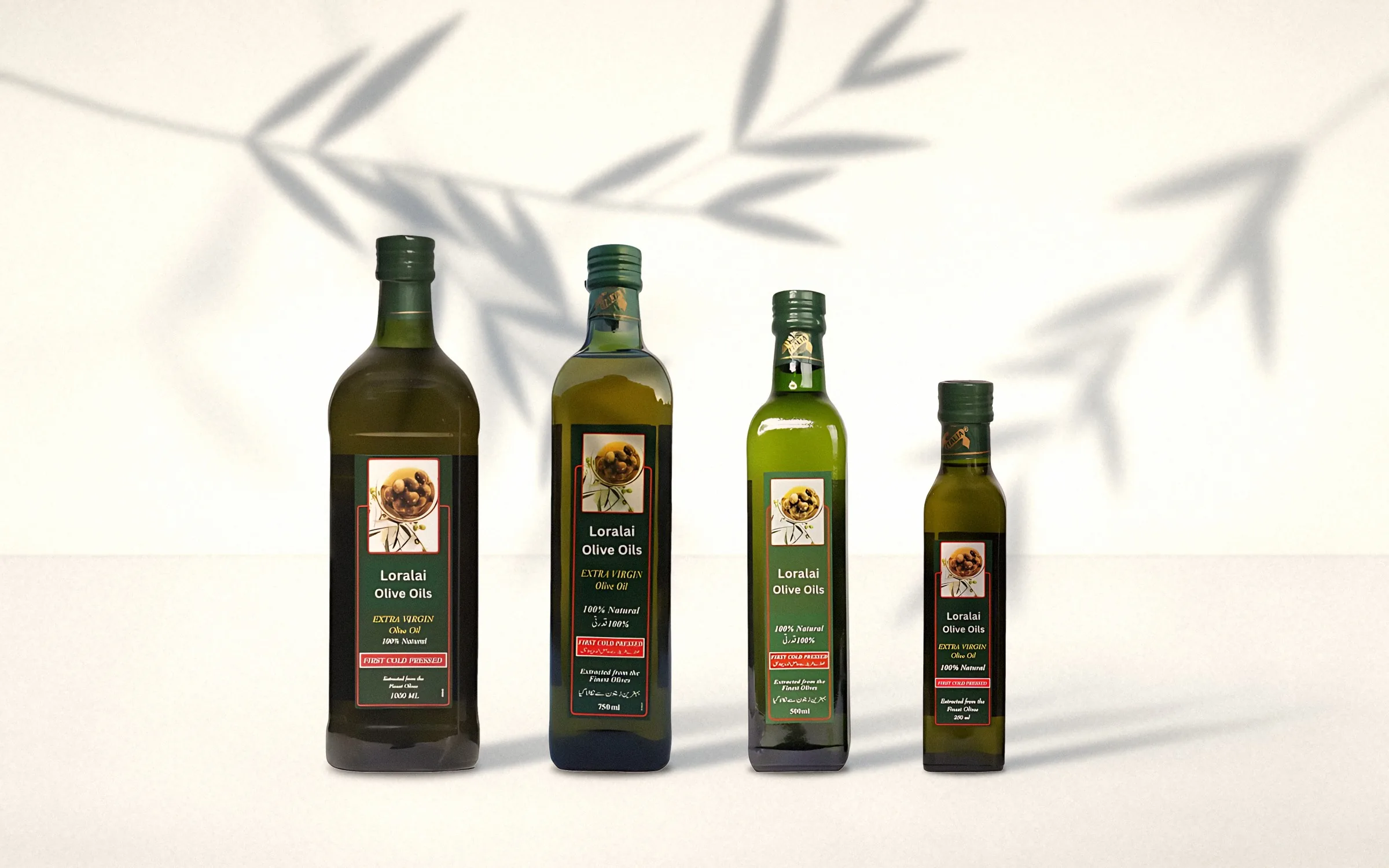
    Quick answer: In 2026, Loralai extra virgin olive oil costs Rs 6,000 for 1 litre, Rs 5,000 for 750 ml, Rs 3,500 for 500 ml and Rs 2,500 for 250 ml, with free delivery across Pakistan. The 1 litre bottle is the cheapest per litre. Refined “olive oil”, “extra light” and pomace oil cost less because they are refined or extracted with solvents, not because they are better value.

    We get asked about price more than anything else, so this page explains our prices openly and gives you the tools to compare any bottle on the shelf, ours or anyone else’s. Prices are checked and updated whenever they change.

    Our extra virgin olive oil prices in Pakistan

    BottlePricePrice per litrePrice per tablespoon (15 ml)
    1 litreRs 6,000Rs 6,000about Rs 90
    750 mlRs 5,000Rs 6,667about Rs 100
    500 mlRs 3,500Rs 7,000about Rs 105
    250 mlRs 2,500Rs 10,000about Rs 150

    All prices include delivery anywhere in Pakistan. You pay cash on delivery. For 30 litres or more, ask for a wholesale price.

    If you are outside Pakistan, the shop shows prices in your currency: US$39, AED 145 or SAR 145 for the 1 litre bottle. Buying in the Emirates? Read olive oil price in UAE and how to pick an original bottle.

    Price per litre: the only fair comparison

    Bottle prices hide the real cost. A 250 ml bottle can look cheap and still cost far more per litre. Before you compare two brands, divide the price by the size:

    Price per litre = bottle price ÷ bottle size in litres

    For example, a 500 ml bottle at Rs 3,500 is Rs 3,500 ÷ 0.5 = Rs 7,000 per litre. If a recipe or daily habit uses one or two tablespoons, you can also think in price per tablespoon: one litre holds about 66 tablespoons.

    Olive oil is sometimes sold by weight. One litre of olive oil weighs about 0.92 kg, so a 1 kg pack holds about 1.09 litres.

    Why the grades cost different amounts

    The grade on the label explains most of the price difference you see in Pakistani shops.

    GradeHow it is madeRelative price
    Extra virginPressed from fresh olives only, no refining, no defectsHighest
    VirginPressed only, small defects allowedHigh
    Olive oil / pure / classicMostly refined olive oil with a little virgin oilMedium
    Extra lightRefined olive oil, almost no virgin oilMedium
    Olive pomace oilExtracted from leftover paste with solvents, refinedLowest

    Refining strips colour, smell and most natural antioxidants, which lets producers use damaged or old olives. Pomace oil goes further and uses what is left after pressing. Both are legal and safe to cook with, but they are a different product from extra virgin. We explain each grade in types of olive oil.

    What goes into the price of extra virgin olive oil

    • Olives. It takes several kilograms of fresh olives to make one litre of oil. The exact number depends on the variety, ripeness and the season.
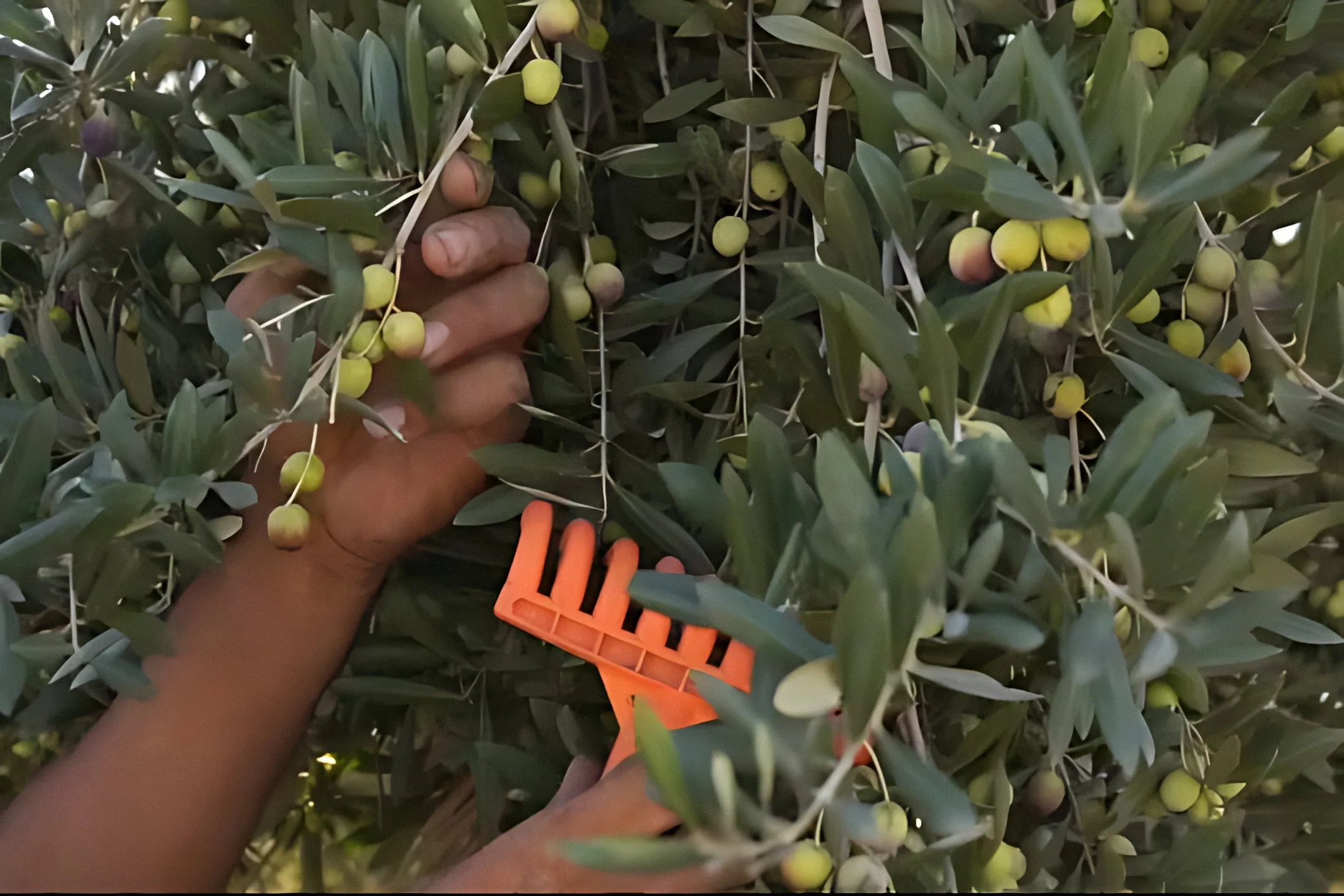
    • Hand picking. Our olives are picked by hand in September and October. It is slow work, and it is the only way to keep the fruit whole.
    • Speed. Olives are pressed the same day they are picked. That means running the press during the harvest, not when it is convenient.
    • Packaging. Dark glass costs more than clear plastic, but it protects the oil from light.
    • Import costs, for imported oil. Most olive oil sold in Pakistan is imported from Spain, Italy or Turkey. Freight, duties and distributor margins are added before it reaches the shelf.

    When a low price is a warning sign

    Real extra virgin olive oil cannot be sold for the same price as ordinary cooking oil. If a bottle labelled “extra virgin” costs much less than others, check these points:

    1. Read the small print. “Olive oil”, “pure”, “light”, “pomace” and “blend” are not extra virgin.
    2. Look for a harvest or best-before date. Old stock is often discounted.
    3. Check the origin. “Blend of oils” or no origin at all is a reason to be careful.
    4. Taste it. Fresh extra virgin olive oil tastes green or fruity and leaves a peppery feeling in the throat. Flat, greasy or rancid taste means old or low-grade oil.

    Our guide how to tell if olive oil is real has more home tests, and it also explains why the “fridge test” is not reliable.

    Which bottle size gives the best value?

    If you…Buy
    Cook with olive oil every day for a family1 litre
    Use it for salads and some cooking750 ml
    Use it mostly raw, or live alone500 ml
    Want to try it, give it as a gift, or use it for hair and skin250 ml

    A bigger bottle is only better value if you finish it while it is fresh. Once opened, aim to use olive oil within two to three months.

    Frequently asked questions

    What is the price of 1 litre olive oil in Pakistan?

    Our 1 litre extra virgin olive oil costs Rs 6,000 with free delivery in 2026. Refined olive oil and pomace oil are sold for less, but they are not extra virgin.

    What is the price of extra virgin olive oil in Pakistan?

    For Loralai extra virgin olive oil: Rs 2,500 (250 ml), Rs 3,500 (500 ml), Rs 5,000 (750 ml) and Rs 6,000 (1 litre).

    Why is olive oil so expensive in Pakistan?

    Most olive oil in Pakistan is imported and pays freight and duties. Extra virgin oil also needs many kilograms of fresh olives per litre and careful, fast pressing. Locally grown oil from Balochistan avoids the import costs.

    Is cheap olive oil fake?

    Not always, but it is often a lower grade such as pomace or refined olive oil, or old stock. Read the grade and the date on the label.

    Is there a wholesale price for restaurants and shops?

    Yes, for orders of 30 litres or more. Send an enquiry through our wholesale page.

    Do you deliver outside Pakistan?

    Yes. Delivery is free to the UAE, Saudi Arabia and other countries, and prices are shown in your local currency.

  • Olive Oil: The Complete Guide to Types, Uses, Benefits and Buying

    Olive Oil: The Complete Guide to Types, Uses, Benefits and Buying

    Quick answer: Olive oil is the oil pressed from the fruit of the olive tree. The best grade, extra virgin olive oil, is made only by crushing and pressing fresh olives, with no heat or chemicals, and must meet strict limits for acidity and taste. It is used for cooking, salads, hair and skin care, and it is one of the most studied fats in human nutrition.

    We grow olives and press our own oil in Loralai, Balochistan. This page brings together everything we have learned and written about olive oil, from the tree to your kitchen. Each section gives you the short version and links to a longer article if you want the full detail.

    What is olive oil?

    Olive oil is a fruit oil. The olive is a small stone fruit, and up to a fifth of a ripe olive can be oil. When the fruit is crushed into a paste and the paste is pressed or spun, that oil separates from the water and the solids. Nothing has to be added to get it out.

    That is what makes olive oil different from most cooking oils. Sunflower, canola and soybean oil come from seeds and are usually extracted with solvents and then refined. Good olive oil is closer to a fresh fruit juice: it can be eaten exactly as it comes out of the press.

    In Urdu, olive oil is zaitoon ka tel (زیتون کا تیل). We explain the Urdu names and their meaning in olive oil meaning in Urdu. For benefits, daily use and price explained in Roman Urdu, read zaitoon ka tel ke fayde aur istemal.

    The grades of olive oil

    Not every bottle labelled “olive oil” is the same product. The International Olive Council (IOC) sets the trade standard that most countries follow.

    GradeHow it is madeFree acidity limitBest use
    Extra virgin olive oilPressed from olives only, no heat or chemicals, no taste defects0.8% or lessEverything: salads, cooking, hair and skin
    Virgin olive oilSame process, small taste defects allowed2.0% or lessCooking
    Olive oil (also sold as “pure” or “classic”)Refined olive oil blended with some virgin oil1.0% or lessGeneral cooking
    Extra light olive oilRefined olive oil, very little virgin oil, light taste (not fewer calories)1.0% or lessBaking, frying
    Olive pomace oilOil taken from the leftover paste with solvents, refined, then blended1.0% or lessHigh-volume frying, soap, massage

    For a direct comparison of the three grades you will see most often, read virgin and extra virgin olive oil vs regular olive oil.

    The full explanation, including what “refined” really means, is in types of olive oil. If you see pomace oil at a low price, read pomace olive oil explained before you buy it.

    How olive oil is made

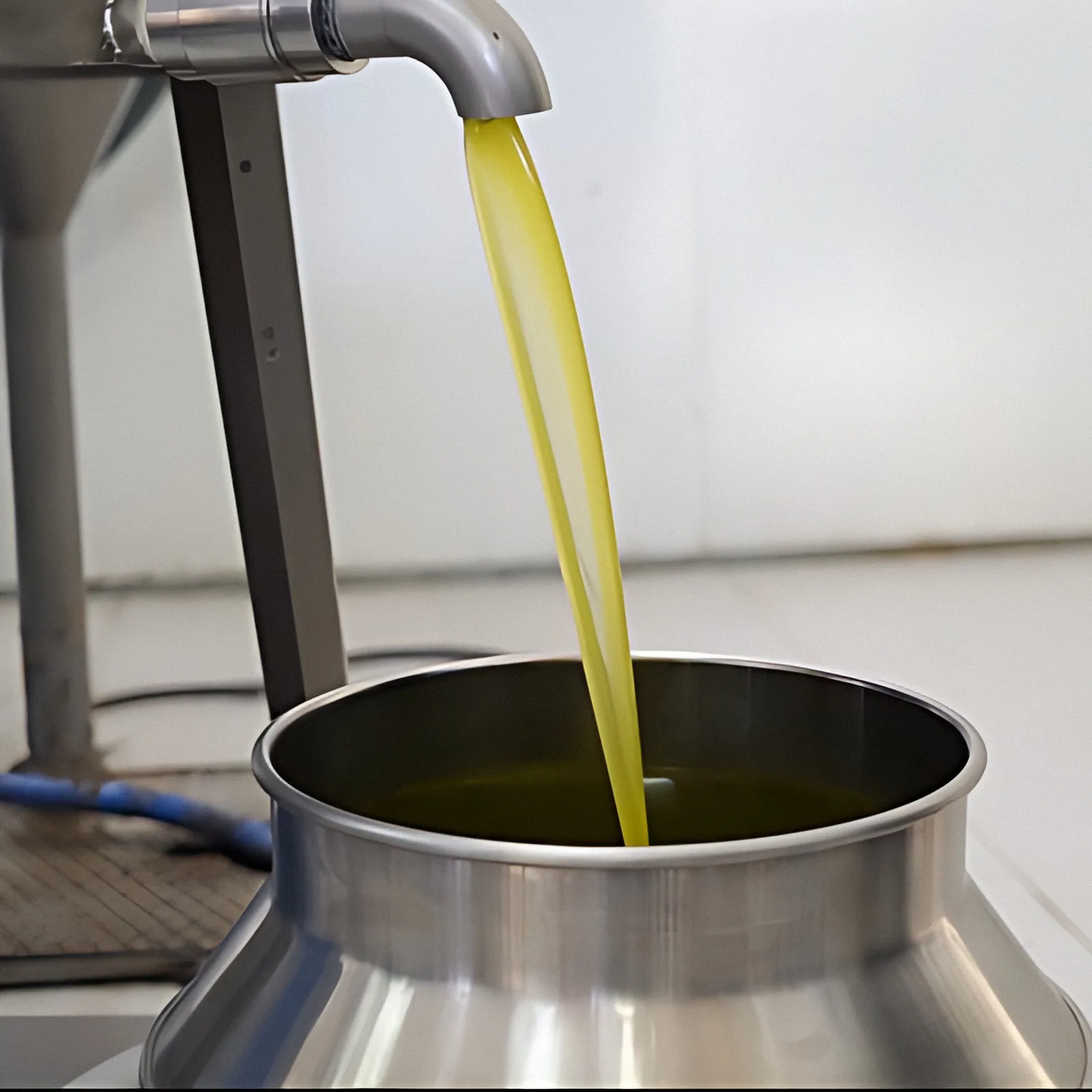
    Good olive oil takes eight simple steps: picking, washing, crushing, slow mixing, pressing, separating, settling and bottling. The skill is in doing them fast and keeping everything cool. Olives start to spoil as soon as they leave the tree, so the best producers press on the same day they pick. We walk through every step on our own farm in how olive oil is made.

    “Cold pressed” and “extra virgin” are often used together, but they do not mean the same thing. See cold pressed vs extra virgin olive oil.

    Cooking with olive oil

    Extra virgin olive oil is more stable under heat than most people think. In a 2018 laboratory study that heated ten common oils for six hours at 180 °C, extra virgin olive oil produced the fewest harmful polar compounds. You can use it for everyday cooking, shallow frying, roasting and baking, and of course raw on salads.

    Health and nutrition

    One tablespoon of olive oil has about 119 calories and 13.5 g of fat, most of it monounsaturated. Olive oil has no carbohydrates, no protein and no cholesterol. Full tables are in olive oil calories and nutrition.

    Large studies link olive oil, especially extra virgin olive oil used in place of butter and other saturated fats, with a lower risk of heart disease. We summarise what the research does and does not show in olive oil benefits. The natural antioxidants behind the bitter, peppery taste of fresh oil are explained in olive oil polyphenols.

    Olive oil for hair, skin and massage

    Olive oil has been used on hair and skin in Pakistan, the Middle East and the Mediterranean for centuries. It works well as a pre-wash hair treatment and as a massage oil. For skin, the evidence is more mixed than most websites admit, especially for babies and people with eczema.

    How to buy good olive oil

    1. Choose extra virgin if you want the full taste and the natural antioxidants.
    2. Look for a harvest date. Olive oil is best within 18 months of harvest.
    3. Pick dark glass or a tin. Light damages olive oil.
    4. Check where it comes from. A single named origin is a good sign. “Blended from EU and non-EU oils” tells you little.
    5. Compare the price per litre, not the price per bottle.

    Our buyer’s checklist for the Pakistani market is in best olive oil in Pakistan, and current prices are explained in olive oil price in Pakistan (for buyers in Dubai and Abu Dhabi, see olive oil price in UAE, and for Riyadh and Jeddah, best olive oil in Saudi Arabia). To test a bottle you already have, use how to tell if olive oil is real. To keep it fresh at home, read how to store olive oil. To judge freshness with your own nose and mouth, follow how to taste olive oil.

    Olive oil from Pakistan

    Pakistan now grows olives at scale, and Loralai in north-east Balochistan is the centre of it. Government and farmer plantings in Balochistan alone have passed 2.6 million olive plants. Read olive oil from Pakistan for the story, or visit our orchard to see where our own oil comes from.

    Frequently asked questions

    What is the healthiest type of olive oil?

    Extra virgin olive oil. It is not refined, so it keeps the natural polyphenols and vitamin E that are lost when oil is refined. Most of the research on olive oil and heart health used extra virgin olive oil.

    Can you cook Pakistani food with olive oil?

    Yes. Extra virgin olive oil works for salan, daal tarka, sabzi, eggs and shallow frying. For deep frying large batches, a refined olive oil or pomace oil is cheaper. See best olive oil for cooking.

    How long does olive oil last?

    Unopened, around 18 months from harvest if kept cool and dark. Once opened, use it within two to three months for the best taste.

    Is olive oil good for hair?

    It can make dry hair softer and shinier and reduce breakage when used as a pre-wash treatment. It does not cure hair loss. See olive oil for hair.

    Sources

  • Olive Oil from Pakistan: What to Know Before You Buy

    Olive Oil from Pakistan: What to Know Before You Buy

    Quick answer: Yes, Pakistan produces its own olive oil. Olives are grown mainly in Balochistan, especially around Loralai, on the Potohar plateau in Punjab, and in parts of Khyber Pakhtunkhwa. About 2.6 million olive plants in Balochistan have now entered production. Fresh Pakistani extra virgin olive oil, pressed the same day it is picked, can match good imported oil.

    Most people think of Spain, Italy or Greece when they think of olive oil. Pakistan is a newer name on that list, but olive trees have been planted across the country’s dry hills for the past two decades, and a growing number of farms now press their own oil. If you have seen a bottle labelled “Product of Pakistan” and wondered whether it is worth trying, this guide explains where the olives grow, how the oil is made and what to look for on the label.

    Where olives grow in Pakistan

    The olive tree likes hot, dry summers, cool winters and soil that drains well. Several parts of Pakistan have exactly that climate.

    • Balochistan, especially the high valleys in the north-east of the province, such as Loralai. Summers are hot and dry, winters are cold, and rain is light. These conditions suit the olive and keep many pests away.
    • The Potohar plateau in northern Punjab, around Chakwal and nearby districts, where large government-supported plantations were started.
    • Parts of Khyber Pakhtunkhwa, where wild olive trees have always grown on the hills and many have been grafted with fruiting varieties.

    Our own trees grow in Loralai. The valley sits high above sea level, and the difference between day and night temperatures during the growing season helps the fruit develop slowly.

    How Pakistani olive oil is made

    The process is the same as anywhere else in the world. What matters is how carefully it is done.

    1. Harvest. In Pakistan, olives are usually picked from September to October, as the fruit turns from green to purple. Early fruit gives a greener, more peppery oil. Later fruit gives a softer, rounder oil.
    2. Pressing. The olives are washed, crushed into a paste, slowly mixed, and the oil is separated in a centrifuge. Good producers press within hours of picking, because olives start to lose quality as soon as they come off the tree.
    3. Settling and bottling. The fresh oil rests so that fine particles sink, and is then bottled, ideally in dark glass or tins.

    At Loralai Olive Oils we press on the same day we pick, and we do not add heat or chemicals at any stage. You can read more about this on our orchard page.

    Is olive oil from Pakistan any good?

    Quality depends on the farm, not the country. A careful farm in Pakistan can produce excellent extra virgin olive oil, and a careless farm anywhere can produce poor oil. When you judge a bottle, look at the same things you would look at for an Italian or Spanish brand:

    • The grade. “Extra virgin” is the highest grade. “Pure”, “light” or plain “olive oil” usually means refined oil, often blended with a little virgin oil for colour and flavour.
    • The origin. A single named place, such as one valley or one farm, is a good sign. Vague wording like “packed in” or “blend of oils from several countries” tells you very little.
    • The harvest season. Fresh oil is better oil. If you can find out when the olives were picked, choose the most recent harvest.
    • The container. Light damages olive oil, so dark glass or a tin is better than clear plastic.
    • The taste. Good extra virgin olive oil smells fresh and green, tastes fruity, and often leaves a peppery feeling at the back of the throat. A flat, greasy or waxy taste is a warning sign.

    For a fuller checklist, see our guide on how to tell if extra virgin olive oil is real.

    What Loralai olive oil tastes like

    Oil from our valley is usually bright and grassy, with a gentle bitterness and a peppery finish. It works well raw, poured over salads, hummus, labneh, grilled vegetables or warm bread, and it is also good for everyday cooking.

    Buying Pakistani olive oil outside Pakistan

    We sell directly from our own trees, so there is no middleman between the orchard and your kitchen. On our shop, prices appear in your own currency: Pakistani rupees, UAE dirhams, Saudi riyals, or US dollars elsewhere. Delivery is free, and you pay in cash when your order arrives.

    If you buy for a restaurant, a grocery shop or your own label, we also supply larger quantities. Orders start at 30 litres. Send us a wholesale enquiry and we will reply with prices and delivery times.

    Frequently asked questions

    Does Pakistan produce olive oil?

    Yes. Balochistan, the Potohar region of Punjab and parts of Khyber Pakhtunkhwa all grow olives, and local mills press the oil.

    Where is olive oil produced in Pakistan?

    Mainly in Balochistan, with Loralai as a major centre, and in the Potohar plateau around Chakwal. Balochistan olives are reported to contain 18 to 22% oil.

    Is Pakistani olive oil good?

    The best Pakistani extra virgin oils are fresh and well made. Quality depends on the farm, so check the grade, origin and harvest date.

  • How to Tell If Extra Virgin Olive Oil Is Real: 7 Checks

    How to Tell If Extra Virgin Olive Oil Is Real: 7 Checks

    Quick answer: To tell if extra virgin olive oil is real, check that the label says “extra virgin”, shows a clear origin and a harvest or best-before date, and that the oil comes in dark glass or a tin at a believable price. Then taste it: real extra virgin olive oil smells fresh and green and leaves a peppery feeling in the throat. The fridge test is not reliable.

    Extra virgin olive oil is one of the most commonly faked foods in the world. Some bottles are blended with cheaper oils, some are refined oil with a little virgin oil added for colour, and many are simply old. You cannot run a laboratory test at home, but you can avoid most bad bottles with seven simple checks.

    1. Read the grade on the label

    Look for the words “extra virgin”. This is a defined grade: the oil must be extracted only by mechanical means, have low free acidity and have no taste defects. Other names mean something different:

    • Virgin olive oil: mechanically extracted, but with small defects or higher acidity.
    • Olive oil, pure olive oil or light olive oil: usually refined oil with some virgin oil added. “Light” refers to flavour and colour, not calories.
    • Olive pomace oil: extracted from the leftover paste with solvents, then refined.

    If the label does not say extra virgin, it is not extra virgin.

    2. Look for a clear origin

    Real producers are proud of where their olives grow, so they name it: a country, a region, often a single farm. Be careful with phrases such as “bottled in” or “packed in”, which only tell you where the oil was put into the bottle. A mix of oils from several countries is not necessarily bad, but it is harder to trace.

    3. Check the harvest or best-before date

    Olive oil does not improve with age. It is at its best within about 12 to 18 months of the harvest. A harvest date is the most useful information on a label. If there is only a best-before date, choose the bottle with the latest date, because it was usually bottled more recently.

    4. Choose dark glass or a tin

    Light and heat break down olive oil quickly. Clear plastic bottles on a bright shelf are a poor sign. Dark green or brown glass, or a metal tin, protects the oil. Read more in our guide on storing olive oil.

    5. Be careful with very low prices

    Growing olives, picking them and pressing them on the same day costs money. A litre of real extra virgin olive oil cannot cost the same as a litre of sunflower oil. A very low price does not prove fraud, but it is a reason to look more closely at everything else on this list.

    6. Smell and taste it

    This is the most reliable test you can do at home. Pour a little into a small glass, warm it in your hand for a minute, then smell and sip it.

    • Good signs: a fresh smell of cut grass, green leaves, tomato or green apple; a fruity taste; some bitterness; and a peppery tickle at the back of the throat that may make you cough. That peppery feeling comes from natural compounds found in fresh extra virgin oil.
    • Bad signs: a smell of crayons, putty or old nuts (the oil has gone rancid); a vinegar or wine smell; a muddy or mouldy smell; or almost no smell and taste at all.

    Not all real extra virgin oil is strongly peppery. Oil from riper olives can be mild. But a real extra virgin oil should never taste stale or greasy.

    7. Do not rely on the fridge test

    You may have read that real olive oil goes solid in the fridge. This is a myth. How olive oil behaves in the cold depends on the olive variety, the harvest and the fat profile, and some blended oils also turn cloudy in the fridge. The fridge test cannot tell you whether an oil is extra virgin.

    A quick checklist

    • The label says extra virgin.
    • The origin is clearly named.
    • You can see a harvest date, or at least a recent best-before date.
    • The bottle is dark glass or a tin.
    • The price is realistic.
    • It smells fresh and green, and tastes fruity, bitter or peppery.

    Our oil comes from a single place, our own trees in Loralai, Balochistan. We pick in September and October and press on the same day. Every size, from 250 ml to 1 litre, is bottled in dark glass.

    Frequently asked questions

    How can I check if olive oil is pure at home?

    Read the grade, origin and date on the label, then smell and taste a spoonful. Fresh, fruity, slightly bitter and peppery means good extra virgin oil. A greasy, flat or crayon-like smell means old or low-grade oil.

    Does real olive oil freeze in the fridge?

    Most olive oil goes cloudy or partly solid in the fridge, but so do some blends. It is not a reliable test.

    Why is real olive oil peppery?

    Fresh extra virgin olive oil contains polyphenols such as oleocanthal, which cause the peppery catch in the throat.

  • Cold Pressed vs Extra Virgin Olive Oil: What Is the Difference?

    Cold Pressed vs Extra Virgin Olive Oil: What Is the Difference?

    Quick answer: “Cold pressed” describes how the oil was extracted: the olive paste was kept below 27 °C. “Extra virgin” is a quality grade: the oil must be made mechanically, have free acidity of 0.8% or less and pass a taste test with no defects. Good extra virgin olive oil is usually cold extracted, but a cold pressed oil is not automatically extra virgin.

    Many bottles say “cold pressed” and “extra virgin” on the same label, so it is easy to think they mean the same thing. They do not. One describes how the oil was made. The other describes how good the finished oil is.

    What “cold pressed” means

    Olives are crushed into a paste, the paste is mixed, and the oil is separated from the water and solids. If the paste is warmed, more oil comes out, but heat also damages flavour and aroma. “Cold pressed” or “cold extracted” means the paste was kept at a low temperature during this process. In European Union rules, the term can only be used when the temperature stays below 27°C.

    Strictly speaking, “pressed” is an old word. Very few mills still use presses. Most use a centrifuge, which is why you will also see “cold extracted”. Both terms describe the same idea: no heat added.

    What “extra virgin” means

    Extra virgin is a quality grade with rules behind it. To be called extra virgin, an olive oil must:

    • be extracted only by mechanical means, without chemical solvents or refining;
    • have low free acidity, a measure of how much the oil has broken down (no more than 0.8% under international standards);
    • pass a tasting test by a trained panel, with some fruitiness and no defects such as rancid, musty or winey flavours.

    So extra virgin is about the result. It tells you the oil is unrefined and free of faults.

    How the two terms fit together

    • Almost all real extra virgin olive oil is cold extracted, because heat would make it harder to meet the taste standard.
    • But “cold pressed” alone does not guarantee extra virgin quality. Oil from damaged or old olives can be cold pressed and still have defects.
    • Refined, “pure” or “light” olive oils are not cold pressed in any meaningful way, because refining uses heat and chemical treatment.

    When you shop, look for extra virgin first. “Cold pressed” is a useful extra detail, but the grade is what matters most.

    What about “first cold pressed”?

    This phrase comes from the days of stone presses, when the same paste was pressed more than once. Modern mills extract the oil in a single step, so there is no second pressing. “First cold pressed” is a traditional phrase that today means much the same as “cold extracted”.

    Does it change the taste?

    Yes. Low temperatures keep the fresh, green aromas and the natural bitter and peppery compounds in the oil. Warmer extraction gives more oil, but it tastes flatter.

    Speed matters just as much as temperature. Olives begin to lose quality as soon as they are picked, so the time between harvest and mill is important. At Loralai Olive Oils we press our olives on the same day we pick them, with no heat and no chemicals, and nothing is blended in. See all sizes in our shop, or read about how we grow and press our oil.

    Quick summary

    TermWhat it tells you
    Cold pressed / cold extractedThe paste was not heated during extraction (below 27°C in EU rules)
    Extra virginHighest grade: mechanical extraction, low acidity, no taste defects
    VirginMechanical extraction, but small defects or higher acidity
    Pure / light / olive oilMostly refined oil, with a little virgin oil added

    Frequently asked questions

    Is cold pressed olive oil the same as extra virgin?

    No. Cold pressed is a method; extra virgin is a grade with chemical and taste tests.

    Which is better, cold pressed or extra virgin?

    Look for both. Extra virgin is the more important word, because it guarantees quality tests were passed.

    Is all extra virgin olive oil cold pressed?

    Most is cold extracted today, usually with a centrifuge rather than a press, to protect aroma and antioxidants.