
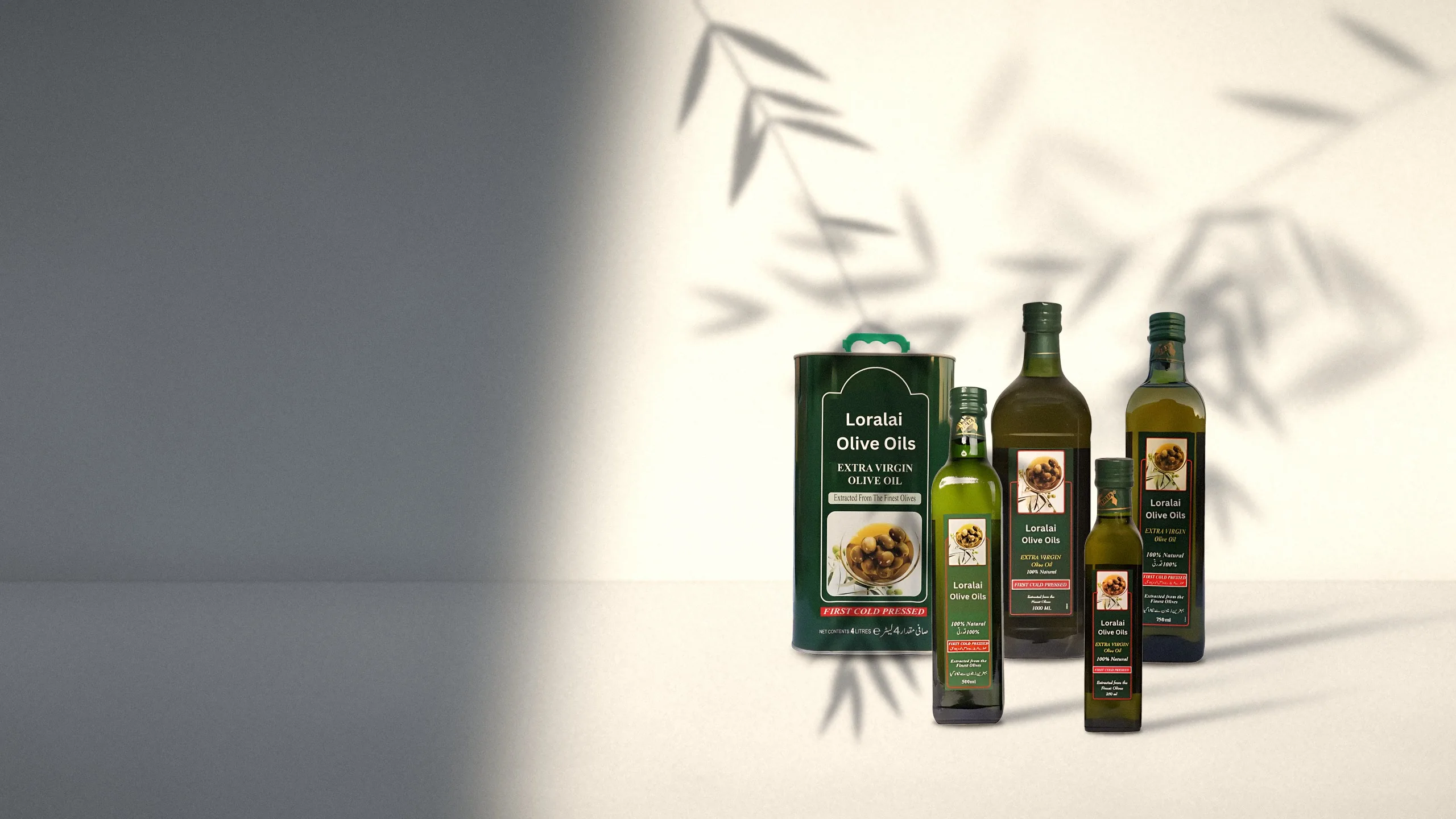
Quick answer: The best olive oil in Pakistan is a fresh extra virgin olive oil with a clear origin and a recent harvest date, packed in dark glass or a tin, from a seller who tells you exactly where and when it was made. Price per litre, not price per bottle, is the fair way to compare. Imported and Pakistani oils can both be excellent. Freshness and grade matter more than the country.
We make olive oil, so we are not neutral. Instead of a “top 10 brands” list, which no one can verify, here is the checklist we would use ourselves. Use it on any bottle, including ours.
In this guide
1. Check the grade
Only extra virgin olive oil is unrefined and keeps the full natural antioxidants and taste. Anything labelled “olive oil”, “pure”, “classic”, “light”, “extra light” or “pomace” is refined or partly refined. These are fine for frying, but they are a different product and should cost less. See types of olive oil.
2. Find the harvest date or best-before date
Olive oil is a fresh product. It is at its best within 18 months of harvest, and it slowly loses flavour and antioxidants after that. A harvest date is the best sign of an honest producer. If there is only a best-before date, assume the oil was bottled about two years before it.
Olive oil imported from Europe often spends months in shipping and warehouses before it reaches a Pakistani shelf. Local oil can be much fresher if it is sold within the season.
3. Look at the origin
- Good sign: a single country or region, ideally a named farm or area.
- Less useful: “Packed in”, “Imported by” or “Blend of EU and non-EU oils”. These tell you where it was bottled, not where the olives grew.
4. Choose dark glass or a tin
Light and heat damage olive oil. Dark glass and tins protect it. Clear plastic bottles on a sunny shop shelf are the worst case.
5. Compare price per litre
Divide the price by the size in litres. A 250 ml bottle at Rs 2,500 is Rs 10,000 per litre, while a 1 litre bottle at Rs 6,000 is Rs 6,000 per litre. See olive oil price in Pakistan for a full comparison.
If an “extra virgin” oil costs about the same as ordinary cooking oil, it is very unlikely to be what it says.
6. Taste it
Pour a spoon into a small glass, warm it in your hand, smell it, then sip.
- Good: smells like fresh grass, green apple, tomato leaf or artichoke; tastes fruity; slightly bitter; leaves a peppery feeling in the throat.
- Bad: smells like crayons, old nuts or putty (rancid), vinegar, wet cardboard or mud; tastes greasy and flat.
Our article how to tell if olive oil is real explains each test.
7. Ask the seller questions
A good seller can answer these:
- Where were the olives grown?
- When were they harvested?
- How soon were they pressed after picking?
- Is any other oil blended in?
- How is the oil stored before bottling?
Our answers: the olives grow on our own trees in Loralai, Balochistan; we harvest in September and October; we press the same day; nothing is blended in; and the oil is kept in closed steel tanks away from light until bottling.
Imported vs Pakistani olive oil
| Imported olive oil | Pakistani olive oil | |
|---|---|---|
| Origin | Mostly Spain, Italy, Turkey, Tunisia | Balochistan, Potohar, Khyber Pakhtunkhwa |
| Freshness on the shelf | Often older, after long shipping and storage | Can be very fresh if sold in season |
| Price | Includes freight, duties and importer margins | No import costs |
| Range | Wide choice of grades and brands | Smaller producers, mostly extra virgin |
| Track record | Long history and established standards | Newer industry, quality varies by farm |
Pakistan’s olive industry has grown fast. Loralai is now described as the hub of olive cultivation in Balochistan, where about 2.6 million olive plants have entered production. Balochistan olives are also reported to have high oil content. The best Pakistani oils can compete with imports, but quality depends on each farm’s care, so use the checklist.
Questions people ask about choosing
Is Spanish or Italian olive oil better than Pakistani?
Not automatically. Spain and Italy produce some of the world’s best oils and also a lot of ordinary refined oil. A fresh Pakistani extra virgin oil can be better than an old imported bottle.
Which olive oil is best for cooking?
Extra virgin for everyday cooking at home, refined or pomace for deep frying large amounts. See best olive oil for cooking.
Which olive oil is best for hair and skin?
Extra virgin, because it is not refined or extracted with solvents. See olive oil for hair.
Frequently asked questions
What is the best olive oil in Pakistan?
The best olive oil is fresh extra virgin olive oil with a known origin and harvest date, in dark glass or a tin, at a fair price per litre. Use the checklist above to judge any brand.
What is the best extra virgin olive oil in Pakistan?
Look for a single origin, a harvest date within the last 18 months, and a fruity, bitter and peppery taste. Our own Loralai extra virgin olive oil is grown, pressed and bottled on our farm in Balochistan.
Is Pakistani olive oil good quality?
It can be. Balochistan’s dry mountain climate suits olives, and several farms now produce extra virgin oil. Quality varies by producer.
Where can I buy real olive oil in Pakistan?
From a producer or shop that can tell you the origin, harvest date and grade. We deliver free across Pakistan with cash on delivery. Shop olive oil.