
Quick answer: Virgin and extra virgin olive oil are both made from olives by mechanical means only, while regular olive oil is mostly refined. Extra virgin has free acidity of 0.8% or less and no taste defects. Virgin allows up to 2% and small defects. Regular olive oil blends refined oil with a little virgin oil, so it has milder flavour and fewer polyphenols.
Shop shelves often show three bottles that look almost the same: extra virgin, virgin and plain “olive oil”. The price gap can be large, and the labels rarely explain why. This guide compares the three side by side, so you can see what you are paying for and choose the right bottle for salad, cooking or everyday use.
In this guide
The difference between virgin and extra virgin olive oil
Both grades come from the same process. Olives are washed, crushed and separated by mechanical means, without chemical solvents and without refining. The grade is decided afterwards, by a laboratory test and a trained tasting panel.
Under the International Olive Council definitions and EU rules, the two main differences are:
- Free acidity: extra virgin must be 0.8% or less, virgin can go up to 2%.
- Taste: extra virgin must have a fruity taste and zero defects. Virgin must be fruity too, but small defects are allowed (a median defect score of up to 3.5 under EU rules).
In simple words, extra virgin is virgin oil that passed every test with no faults. Virgin oil is still unrefined and fit to eat, but it often comes from riper or less carefully handled fruit. You rarely see it in shops in Pakistan or the Gulf, because producers usually sell their best oil as extra virgin and send the rest to be blended.
For the full standard, read what extra virgin olive oil means.
Extra virgin olive oil vs olive oil
When a bottle only says “olive oil”, or “pure”, “classic” or “light”, it is usually a blend of refined olive oil with some virgin oil. Refining uses heat and physical or chemical treatment to remove strong flavours and faults. It also removes most of the natural aroma and most of the polyphenols.
| Feature | Extra virgin | Virgin | Regular olive oil |
|---|---|---|---|
| How it is made | Mechanical only | Mechanical only | Refined oil plus some virgin oil |
| Free acidity limit | 0.8% | 2% | 1% |
| Peroxide limit (meq O2/kg) | 20 | 20 | 15 |
| Taste test | Fruity, zero defects | Fruity, small defects allowed | Not panel graded |
| Flavour | Fresh, grassy, peppery | Milder, less clean | Neutral |
| Polyphenols | Highest | Medium | Low |
| Best use | Salads, finishing, everyday cooking | Everyday cooking | Mild flavour cooking |
One detail surprises many buyers. Refined olive oil has an acidity limit of only 0.3%, lower than extra virgin. So a low acidity number on its own does not prove quality. Acidity only means something together with the “extra virgin” grade and a clean taste.
Why the taste and smell are so different
Extra virgin oil keeps the natural compounds of the fruit. That is why good oil smells like cut grass or green olives, and why it can taste bitter and catch the back of your throat with a peppery feeling. These are signs of freshness, not faults. Our guide on how to taste olive oil explains what to look for.
Regular olive oil tastes mild because refining takes those compounds away. Some people prefer that for delicate dishes, but it is a difference of flavour and nutrition, not of “strength”.
Which is healthier?
All olive oils are mostly monounsaturated fat and have about the same calories, so “light” olive oil is light in flavour only. The difference is in the minor compounds. Extra virgin olive oil keeps its polyphenols, while refining removes most of them.
The EU allows one specific health claim here: olive oil polyphenols contribute to the protection of blood lipids from oxidative stress, for oils with at least 5 mg of hydroxytyrosol and related compounds per 20 g (Regulation 432/2012). Refined oils generally do not reach this level, so the claim does not apply to them. Olive oil is a food, not a medicine, so treat it as part of a balanced diet.
Olive oil or extra virgin: which should you buy?
Use this simple rule:
- Salads, raita, hummus, drizzling on daal: extra virgin, because flavour and polyphenols matter most when the oil is not heated.
- Daily cooking, salan, sabzi, karahi: extra virgin works well and is stable at normal cooking temperatures. See cooking with extra virgin olive oil.
- Very mild flavour for baking or deep frying in large amounts: regular olive oil is a cheaper choice, though you lose the polyphenols.
- Virgin olive oil: a fair option if you find it at a good price from a brand you trust, but it is uncommon.
- Pomace oil: a different product made from leftover paste. Read pomace olive oil explained before you buy it.
How to check what you are really buying
Labels are easy to print, so look for the details that are harder to fake:
- The words “extra virgin olive oil” on the front, not only “pure” or “100% olive oil”.
- A harvest date or a best before date that is not close to expiry.
- A dark glass bottle or tin that protects the oil from light.
- The country or origin of the olives, and the name of the producer.
- A price that makes sense. Very cheap extra virgin oil deserves doubt.
Our guide on how to tell if olive oil is real has more checks, including the home tests that do not work. For a full overview of all grades, see types of olive oil.
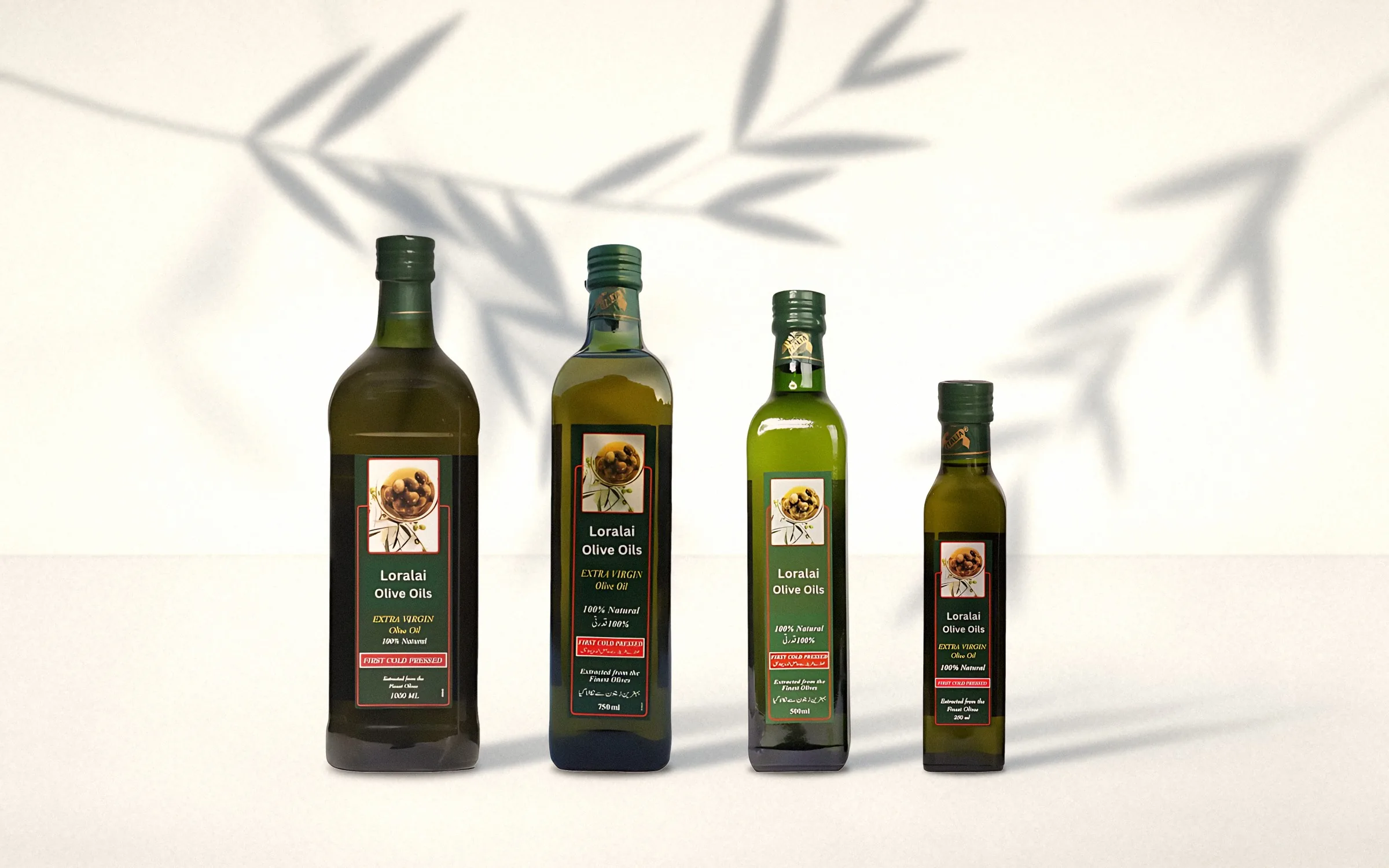
Loralai Olive Oils is extra virgin olive oil from our own orchard near Loralai, Balochistan, pressed the same day without heat or chemicals and bottled in dark glass. You can see the 1 litre bottle or browse all sizes in the shop.
Frequently asked questions
Are all extra virgin olive oils the same?
No. They all meet the same minimum standard, but taste, freshness and polyphenol levels change with the olive variety, harvest time and how the oil is stored. Some are mild and buttery, others are grassy and peppery.
Is virgin olive oil the same as extra virgin?
No. Both are unrefined, but extra virgin has lower acidity (0.8% or less against 2%) and must have no taste defects. Virgin olive oil may have small defects.
Is extra virgin olive oil better than regular olive oil?
For flavour and polyphenols, yes, because it is unrefined. Regular olive oil is mostly refined, so it is milder and has fewer polyphenols. Both have the same fat and about the same calories.
Can I use regular olive oil instead of extra virgin?
Yes, in cooking and baking it works fine. In salads and finishing dishes you will notice less flavour, so extra virgin is the better choice there.
Does light olive oil have fewer calories?
No. “Light” refers to a lighter flavour and colour. One tablespoon has about the same calories as any other olive oil. See our olive oil calories guide.