
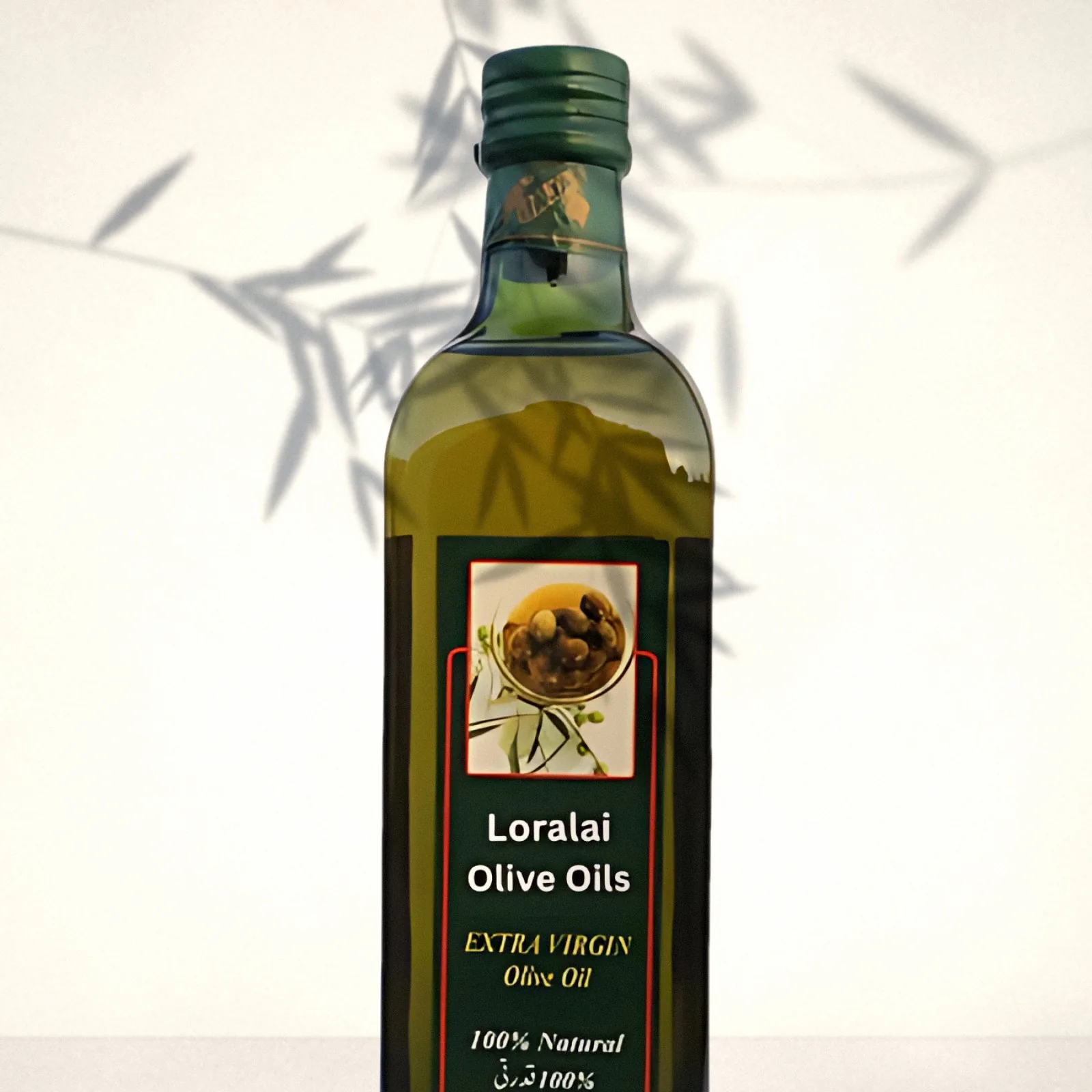
Quick answer: To tell if extra virgin olive oil is real, check that the label says “extra virgin”, shows a clear origin and a harvest or best-before date, and that the oil comes in dark glass or a tin at a believable price. Then taste it: real extra virgin olive oil smells fresh and green and leaves a peppery feeling in the throat. The fridge test is not reliable.
Extra virgin olive oil is one of the most commonly faked foods in the world. Some bottles are blended with cheaper oils, some are refined oil with a little virgin oil added for colour, and many are simply old. You cannot run a laboratory test at home, but you can avoid most bad bottles with seven simple checks.
In this guide
1. Read the grade on the label
Look for the words “extra virgin”. This is a defined grade: the oil must be extracted only by mechanical means, have low free acidity and have no taste defects. Other names mean something different:
- Virgin olive oil: mechanically extracted, but with small defects or higher acidity.
- Olive oil, pure olive oil or light olive oil: usually refined oil with some virgin oil added. “Light” refers to flavour and colour, not calories.
- Olive pomace oil: extracted from the leftover paste with solvents, then refined.
If the label does not say extra virgin, it is not extra virgin.
2. Look for a clear origin
Real producers are proud of where their olives grow, so they name it: a country, a region, often a single farm. Be careful with phrases such as “bottled in” or “packed in”, which only tell you where the oil was put into the bottle. A mix of oils from several countries is not necessarily bad, but it is harder to trace.
3. Check the harvest or best-before date
Olive oil does not improve with age. It is at its best within about 12 to 18 months of the harvest. A harvest date is the most useful information on a label. If there is only a best-before date, choose the bottle with the latest date, because it was usually bottled more recently.
4. Choose dark glass or a tin
Light and heat break down olive oil quickly. Clear plastic bottles on a bright shelf are a poor sign. Dark green or brown glass, or a metal tin, protects the oil. Read more in our guide on storing olive oil.
5. Be careful with very low prices
Growing olives, picking them and pressing them on the same day costs money. A litre of real extra virgin olive oil cannot cost the same as a litre of sunflower oil. A very low price does not prove fraud, but it is a reason to look more closely at everything else on this list.
6. Smell and taste it
This is the most reliable test you can do at home. Pour a little into a small glass, warm it in your hand for a minute, then smell and sip it.
- Good signs: a fresh smell of cut grass, green leaves, tomato or green apple; a fruity taste; some bitterness; and a peppery tickle at the back of the throat that may make you cough. That peppery feeling comes from natural compounds found in fresh extra virgin oil.
- Bad signs: a smell of crayons, putty or old nuts (the oil has gone rancid); a vinegar or wine smell; a muddy or mouldy smell; or almost no smell and taste at all.
Not all real extra virgin oil is strongly peppery. Oil from riper olives can be mild. But a real extra virgin oil should never taste stale or greasy.
7. Do not rely on the fridge test
You may have read that real olive oil goes solid in the fridge. This is a myth. How olive oil behaves in the cold depends on the olive variety, the harvest and the fat profile, and some blended oils also turn cloudy in the fridge. The fridge test cannot tell you whether an oil is extra virgin.
A quick checklist
- The label says extra virgin.
- The origin is clearly named.
- You can see a harvest date, or at least a recent best-before date.
- The bottle is dark glass or a tin.
- The price is realistic.
- It smells fresh and green, and tastes fruity, bitter or peppery.
Our oil comes from a single place, our own trees in Loralai, Balochistan. We pick in September and October and press on the same day. Every size, from 250 ml to 1 litre, is bottled in dark glass.
Related guides
- How to taste olive oil
- Olive oil polyphenols explained
- What is extra virgin olive oil?
- Types of olive oil
- Best olive oil in Pakistan: buyer’s checklist
- Olive oil price in Pakistan
- Olive oil price in UAE and how to pick an original bottle
- Pomace olive oil explained
Frequently asked questions
How can I check if olive oil is pure at home?
Read the grade, origin and date on the label, then smell and taste a spoonful. Fresh, fruity, slightly bitter and peppery means good extra virgin oil. A greasy, flat or crayon-like smell means old or low-grade oil.
Does real olive oil freeze in the fridge?
Most olive oil goes cloudy or partly solid in the fridge, but so do some blends. It is not a reliable test.
Why is real olive oil peppery?
Fresh extra virgin olive oil contains polyphenols such as oleocanthal, which cause the peppery catch in the throat.