
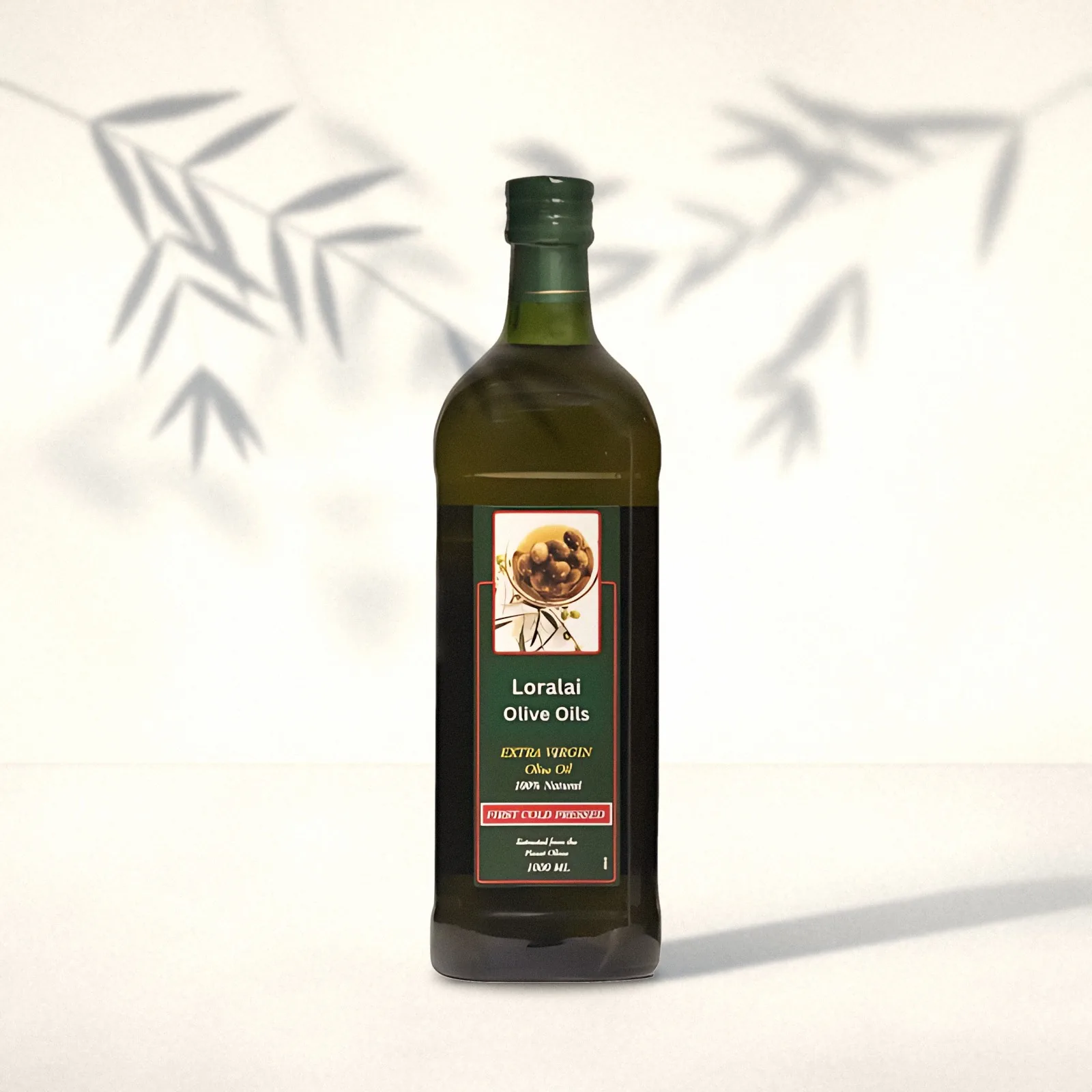
Quick answer: Extra virgin olive oil is the highest grade of olive oil. It is obtained only by mechanical means, crushing and pressing or spinning olives, without heat that alters the oil and without chemicals. It must have free acidity of 0.8% or less, pass other laboratory limits, and be judged by a trained taste panel to have a fruity taste and no defects at all.
“Extra virgin” is not a marketing phrase. It is a legal grade with clear tests. Here is what it means and why it matters.
In this guide
- The meaning of "virgin" and "extra"
- The three tests for extra virgin
- Extra virgin vs other olive oils
- Why extra virgin matters for health
- How to recognise a good extra virgin olive oil
- What is EVOO? The short name on labels
- How to use extra virgin olive oil in everyday cooking
- Organic, cheapest or premium: what the label really tells you
- Our extra virgin olive oil
- Frequently asked questions
The meaning of “virgin” and “extra”
- Virgin means the oil came from olives by mechanical means only. Nothing was refined, and no solvents were used.
- Extra means the oil passed the strictest quality level within the virgin grades: lowest acidity and a perfect score on taste.
The three tests for extra virgin
1. Free acidity: 0.8% or less
Free acidity measures free fatty acids, expressed as oleic acid. It rises when olives are bruised, old, diseased or left too long before pressing. It is a sign of the health of the fruit and the care of the producer. It has nothing to do with a sour taste. The best extra virgin oils are often far below the 0.8% limit.
2. Other laboratory tests
These include peroxide value, which measures early oxidation, and ultraviolet absorption, which can reveal refined oil or old oil. There are also purity tests to detect other oils mixed in.
3. The taste panel
A panel of trained tasters scores the oil. To be extra virgin it must have:
- Fruitiness greater than zero: the smell and taste of fresh olives
- Defects of zero: no rancid, musty, fusty (fermented), winey or muddy notes
Many good oils are also bitter and pungent. Bitterness is felt on the tongue, and pungency is the peppery catch in the throat. Both come from polyphenols and are signs of fresh, healthy oil, not faults.
Extra virgin vs other olive oils
| Extra virgin | Virgin | Olive oil (pure/classic) | |
|---|---|---|---|
| Refined | No | No | Mostly yes |
| Free acidity | 0.8% or less | 2.0% or less | 1.0% or less |
| Taste defects allowed | None | Small | Removed by refining |
| Natural polyphenols | Highest | Medium | Low |
Read the full comparison in types of olive oil.
Why extra virgin matters for health
Most of the studies that link olive oil with lower heart disease used extra virgin olive oil, including the PREDIMED trial. Refining removes most of the polyphenols and vitamin E. See olive oil benefits.
How to recognise a good extra virgin olive oil
- The label says “extra virgin olive oil”, not just “olive oil”.
- There is a harvest date, or at least a best-before date.
- The origin is clear, ideally one country or region.
- The packaging is dark glass or a tin.
- The smell is fresh: grass, green apple, tomato leaf, herbs.
- The taste is fruity, with some bitterness and a peppery finish.
Home tests such as putting oil in the fridge are not reliable. See how to tell if olive oil is real.
What is EVOO? The short name on labels
EVOO is simply the short form of extra virgin olive oil. You will also see it written as “extra-virgin olive oil” or, on many European bottles, as “olive oil extra virgin” because the grade comes after the product name. All of these mean the same legal grade: the top category set by the International Olive Council (IOC). “Virgin olive oil” without the word “extra” is a different, lower grade. It is still unrefined, but it may have acidity up to 2% and small taste defects, so it is not the same thing.
| What you see on the label | What it means |
|---|---|
| Extra virgin olive oil / EVOO | Top grade: mechanical extraction only, acidity 0.8% or less, zero taste defects |
| Virgin olive oil | Unrefined, acidity up to 2%, slight defects allowed |
| Olive oil / pure olive oil / light | Mostly refined olive oil blended with some virgin oil |
| Organic extra virgin olive oil | Extra virgin grade from olives grown under certified organic rules |
How to use extra virgin olive oil in everyday cooking
Extra virgin olive oil is not only for salads. It is a full cooking oil, and the most common uses are simple.
| Use | How | Tip |
|---|---|---|
| Salads and raw dishes | Mix 3 parts oil with 1 part lemon juice or vinegar, salt and pepper | Raw use keeps the full fruity and peppery taste |
| Drizzling | A spoon on dal, hummus, soup, grilled vegetables or bread | Add at the end, after cooking |
| Sauteing and tarka | Medium heat for onions, garlic, eggs, vegetables and curries | Do not let the pan smoke |
| Roasting and baking | Brush on vegetables or chicken, or use in place of butter in some cakes | Use about three quarters of the butter amount |
| Marinades | Oil with yoghurt, garlic, lemon and spices for meat or fish | The oil helps spices coat the food evenly |
Good extra virgin olive oil can be used for normal home cooking at medium heat. Our guide to cooking with extra virgin olive oil explains heat, smoke point and frying in detail. Many people also use it on skin and hair; see olive oil for skin and olive oil for hair.
Organic, cheapest or premium: what the label really tells you
Organic describes how the olives were farmed, not the quality grade of the oil. In the EU, an organic logo means the farm follows Regulation (EU) 2018/848 and is inspected by a certification body. An organic oil can be extra virgin, virgin or even refined, so always look for both words: “organic” and “extra virgin”.
The cheapest extra virgin olive oil is worth a second look. Growing, harvesting and pressing olives within hours costs real money, so a price far below other extra virgin oils can mean old stock, a blend with lower grades, or a mislabelled bottle. A fair way to compare is the price per litre, together with a harvest date and a dark bottle. Our olive oil price guide shows typical per litre prices, and how to tell if olive oil is real lists simple checks you can do at home.
Premium extra virgin oils usually come from early harvest olives, carry a harvest date, and taste green, bitter and peppery because they contain more polyphenols.
Our extra virgin olive oil
Our oil comes from our own olive trees in Loralai, Balochistan. We pick by hand in September and October, press on the same day without heat or chemicals, and bottle in dark glass. Nothing is blended in. See 1 litre, 750 ml, 500 ml or 250 ml.
Frequently asked questions
What does extra virgin olive oil mean?
It means the oil was made from olives by mechanical means only and passed the strictest chemical and taste standards, including free acidity of 0.8% or less and zero taste defects.
What is the difference between olive oil and extra virgin olive oil?
Extra virgin is unrefined and must meet strict quality tests. Plain “olive oil” is mostly refined oil blended with some virgin oil.
Why is extra virgin olive oil bitter or peppery?
Because of natural polyphenols such as oleocanthal. A peppery finish is a sign of fresh, high-quality oil.
Is cold pressed the same as extra virgin?
No. Cold pressed describes the temperature during extraction. Extra virgin is a grade that also requires lab and taste tests. See cold pressed vs extra virgin.
Can extra virgin olive oil go bad?
Yes. It slowly oxidises, especially with light, heat and air. Use it within about 18 months of harvest and two to three months after opening. See how to store olive oil.
What is EVOO?
EVOO stands for extra virgin olive oil, the highest grade of olive oil. It is made only by mechanical means, has free acidity of 0.8% or less and no taste defects.
Why is it called virgin olive oil?
“Virgin” means the oil comes straight from the olive fruit by crushing and pressing or spinning, without chemical refining. “Extra” means it also passed the strictest lab and taste tests.
How do you use extra virgin olive oil?
Use it raw on salads, dal, hummus and bread, and for everyday cooking at medium heat such as sauteing, tarka, roasting and baking. Keep the bottle closed and away from the stove.
Is organic extra virgin olive oil better?
Organic tells you how the olives were farmed. It does not guarantee freshness or taste. A fresh, well stored extra virgin oil with a recent harvest date matters more for quality.
Are the benefits of extra virgin olive oil different for men?
The main long term studies included men and women. In a 2022 Harvard study of more than 90,000 US adults, people who used more than half a tablespoon of olive oil a day had a lower risk of dying from heart disease than people who rarely used it, and swapping butter, margarine or mayonnaise for olive oil was linked to lower risk. It is a healthy fat, not a medicine.
Sources
- International Olive Council: designations and definitions of olive oils
- Estruch et al., 2018, New England Journal of Medicine: PREDIMED trial
- Guasch-Ferré et al., 2022, Journal of the American College of Cardiology: olive oil consumption and mortality among US adults
- EUR-Lex: EU rules on producing and labelling organic products (Regulation 2018/848)