
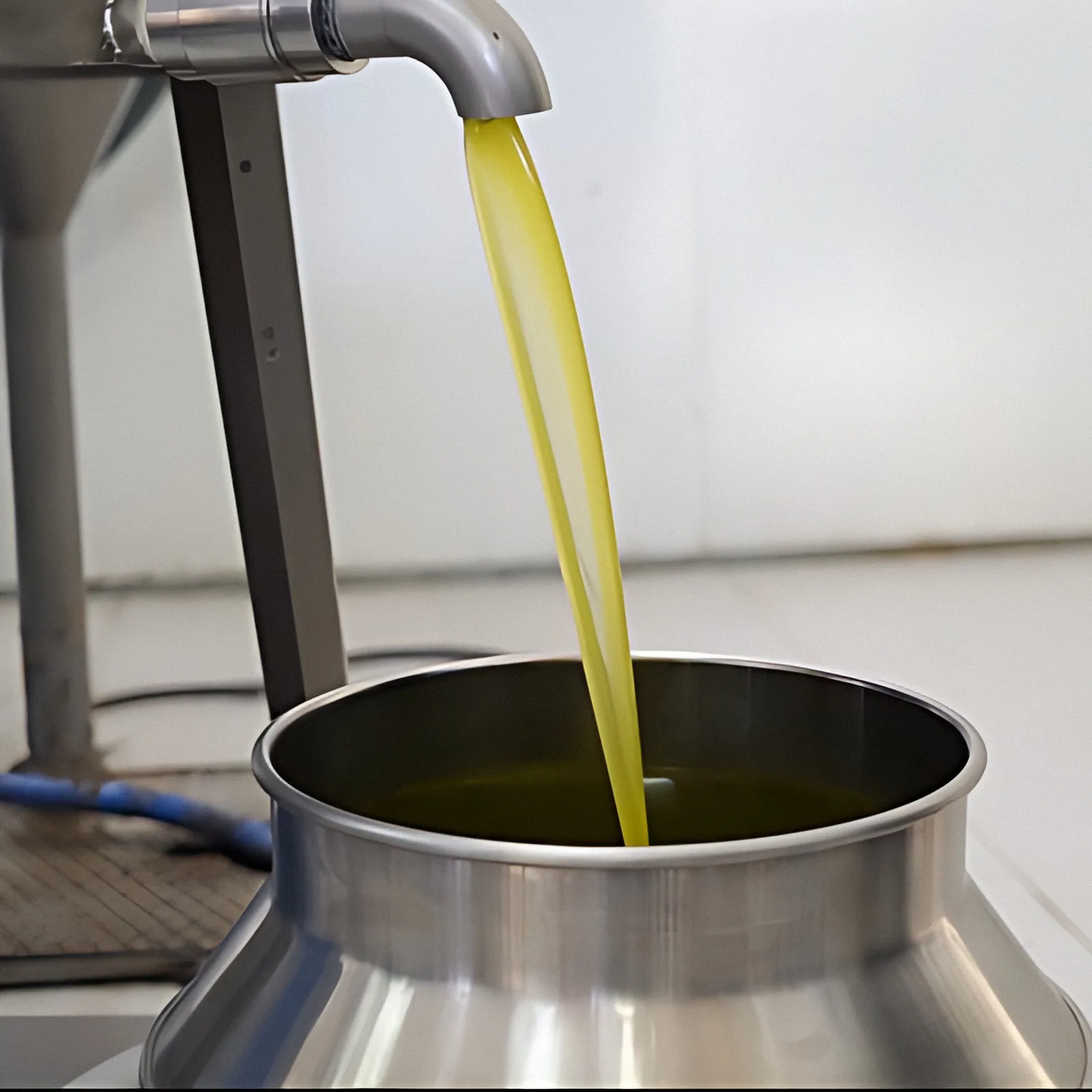
Quick answer: Pour a spoonful into a small glass, cup it in your hand to warm it, then smell it. Take a small sip, draw in air through your teeth, and notice three things: fruitiness (fresh olive aroma), bitterness (on the back of the tongue) and pungency (a peppery catch in the throat). A good extra virgin olive oil smells fresh and green or ripe-fruity, and has no defects such as a musty, vinegary or stale-nut (rancid) smell.
Tasting is the most useful quality check you can do at home. Labels and prices can mislead, but your nose and mouth tell you straight away whether an oil is fresh, tired or faulty.
Professional tasters follow a method set by the International Olive Council (IOC). You do not need a lab to use the main ideas. This guide turns that method into simple steps you can follow in your kitchen.
In this guide
What you need
- A small glass or cup. Official panels use a special tinted glass so the colour does not influence them. At home, any small, clean glass works.
- About one tablespoon of oil (the IOC method uses 14 to 16 ml).
- A slice of green apple and a glass of water to clean your mouth between oils.
- A quiet moment without strong smells: no perfume, no cooking smells, and do not taste straight after coffee or a cigarette.
If you compare several oils, taste no more than three or four at a time. Professional panels assess a maximum of four samples per session for the same reason: the senses tire quickly.
Step-by-step: how to taste olive oil
- Pour. Put about a tablespoon of oil in the glass.
- Warm. Cover the glass with one hand and hold it in the other for a minute or two. The IOC method tests oil at 28 °C because aromas rise better when the oil is slightly warm.
- Swirl and smell. Uncover, swirl gently and take two or three slow sniffs. Ask yourself: is it fresh like cut grass, green leaves, tomato or green apple? Or ripe like almond and soft fruit? Or does something smell wrong?
- Sip. Take a small sip, about a teaspoon. Spread it around your whole mouth.
- Strip. With your lips almost closed, suck in a little air through the oil (it makes a slurping sound). This carries the aroma to the back of your nose.
- Swallow or spit, and wait. Notice any bitterness on the back of the tongue and any peppery sting in the throat. A cough is a good sign, not a bad one.
- Reset. Chew a piece of apple, rinse with water, and wait a minute before the next oil.
The three good things to look for
The IOC names three positive attributes. A good extra virgin olive oil shows fruitiness, and usually some bitterness and pungency as well.
| Attribute | Where you notice it | What it tells you |
|---|---|---|
| Fruity | Nose, and the back of the nose while sipping | Aromas of sound, fresh olives. Green fruity: grass, leaf, artichoke, tomato. Ripe fruity: almond, banana, soft fruit. |
| Bitter | Back of the tongue | Typical of oil from green or turning olives. A clean bitterness is a sign of freshness. |
| Pungent | Throat, a peppery sting | Typical of early-season oil pressed from mostly unripe olives. |
Bitterness and pungency come mainly from natural phenolic compounds. One of them, oleocanthal, is the reason a fresh oil catches the back of the throat. Read more in our guide to olive oil polyphenols.
Common defects and what causes them
A defect is a smell or taste that should not be there. Under IOC rules, an oil with any defect at all cannot be called extra virgin.
| Defect | What it smells or tastes like | Usual cause |
|---|---|---|
| Fusty / muddy sediment | Damp, sweaty, like fermented olives | Olives piled up too long before pressing, or oil left on its sediment |
| Musty / earthy | Mouldy, damp cellar, soil | Olives stored in humid conditions, or picked up from the ground unwashed |
| Winey / vinegary | Wine, vinegar, nail-polish | Fermentation of the fruit with air |
| Frostbitten (wet wood) | Damp wood | Olives damaged by frost on the tree |
| Rancid | Stale nuts, old crayons, putty, old oil paint | Oxidation: old oil, or oil kept in light, heat or an open bottle |
Rancid is the defect you are most likely to meet at home, because it develops after the bottle leaves the mill. See how to store olive oil to slow it down.
What tasting can and cannot tell you
- It can tell you if an oil is fresh, if it has a defect, and roughly how green or ripe the olives were.
- It cannot prove the oil’s grade on its own. The legal grade also needs lab tests such as free acidity (0.8% or less for extra virgin).
- Colour tells you very little. A green oil is not automatically better than a golden one; colour depends on the olive variety and ripeness. That is why panels use tinted glasses.
- The fridge test is not reliable. We explain why in how to tell if olive oil is real.
A simple home tasting score sheet
Rate each oil from 0 (none) to 5 (strong). Write down any defect you notice.
| Oil | Fruity (0-5) | Bitter (0-5) | Pungent (0-5) | Defect noticed? | Notes |
|---|---|---|---|---|---|
| Oil A | |||||
| Oil B | |||||
| Oil C |
If an oil scores 0 on fruity, or you clearly notice a defect, it does not behave like extra virgin olive oil, whatever the label says.
Our extra virgin olive oil
Because our olives are picked by hand and pressed the same day, our oil tastes fresh and fruity, with a gentle bitterness and a light peppery finish. Nothing is blended in. See 1 litre, 750 ml, 500 ml or 250 ml.
New to the subject? Start with what extra virgin olive oil is or browse the full olive oil guide.
Frequently asked questions
Why does good olive oil make you cough?
The peppery sting in the throat is called pungency. It comes from natural phenolic compounds, mainly oleocanthal, and is typical of fresh oil from early-harvest olives. It is a positive quality sign.
Should olive oil taste bitter?
Some bitterness is normal and positive in fresh extra virgin olive oil, especially oil made from green olives. Bitterness felt on the back of the tongue is one of the three positive attributes in the IOC tasting method.
What does rancid olive oil taste like?
Rancid oil smells and tastes like stale nuts, old crayons or putty. It comes from oxidation, usually because the oil is old or was kept in light, heat or an open bottle.
Can you tell the grade of olive oil just by tasting it?
Tasting tells you if an oil is fresh or has defects, which rules out many bad oils. The official grade also needs lab tests, such as free acidity of 0.8% or less for extra virgin.
Does the colour of olive oil show its quality?
No. Colour depends on the olive variety and ripeness. A golden oil can be excellent and a bright green one can be poor, which is why professional tasters use tinted glasses.
Sources
- International Olive Council: COI/T.20/Doc. No 15, sensory analysis of olive oil, method for the organoleptic assessment of virgin olive oil (Rev. 11, 2024)
- International Olive Council: designations and definitions of olive oils
- Beauchamp et al., 2005, Nature 437: 45-46, ibuprofen-like activity in extra-virgin olive oil (summary)