
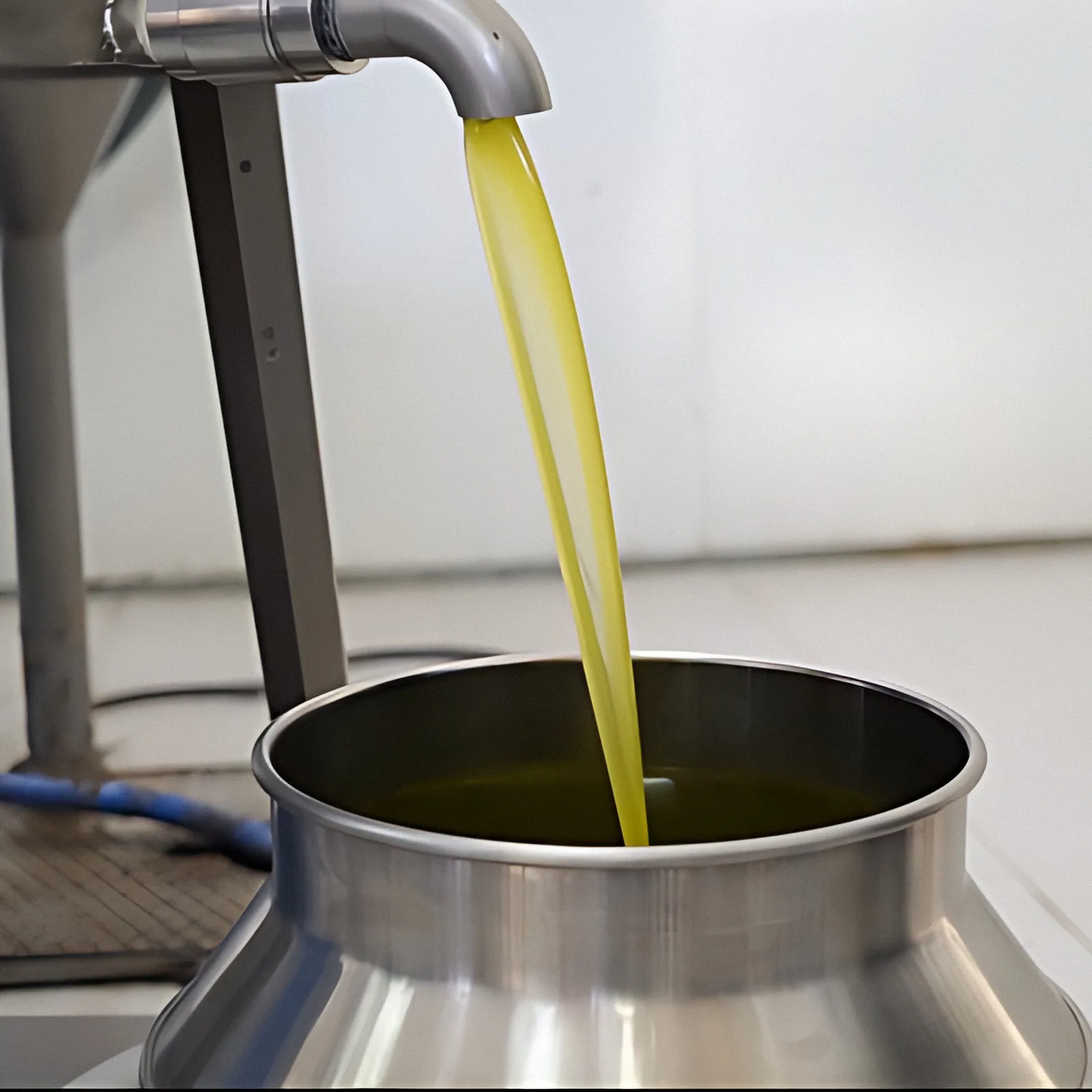
Quick answer: Extra virgin olive oil is made in eight steps: the olives are harvested, washed, crushed into a paste, slowly mixed (malaxation), the oil is extracted by pressing or a centrifuge, separated from water, stored in sealed tanks, and bottled. No heat or chemicals are used. The whole process from picking to oil should take less than a day.
We make our own oil in Loralai, Balochistan, so this is not theory for us. Here is each step, why it matters, and what can go wrong.
In this guide
1. Harvesting
Olives are ready to pick when they start turning from green to purple. In Loralai that is September and October.
- Early harvest (green olives) gives less oil, but it is greener, more bitter and peppery, and richer in polyphenols.
- Late harvest (black olives) gives more oil with a softer, buttery taste and fewer polyphenols.
We pick by hand, tree by tree, and take only the fruit that is ready. Picking by hand keeps the olives whole. Bruised or split olives start to ferment, which raises the acidity of the oil and spoils its taste. Many large farms use machines that shake the trees. That is faster, but it needs careful handling to avoid damage.
2. Washing
The olives are separated from leaves and twigs and washed in clean water to remove dust and soil. Leaves left in the mix make the oil taste bitter and grassy in the wrong way, and dirt gives a muddy taste.
3. Crushing (milling)
The washed olives, with skin, flesh and stones, are crushed into a thick paste. Traditionally this was done with large stone wheels. Today most mills use steel crushers, which are faster and easier to keep clean. The stones help to break open the cells that hold the oil.
4. Malaxation (slow mixing)
The paste is slowly stirred for a short time, usually 20 to 40 minutes. This lets the tiny drops of oil join into larger drops that are easier to separate. It is also when much of the aroma develops.
Temperature matters here. To be called “cold extracted”, the paste must stay below 27 °C. Warmer paste gives more oil, but loses fresh aroma and antioxidants. We keep it cool.
5. Extraction
The oil is separated from the solids. There are two methods:
- Pressing: the traditional way. The paste is spread on mats, stacked and pressed. This is where the phrase “cold pressed” comes from.
- Centrifuge (decanter): the modern way. The paste is spun at high speed so the heavy solids, water and oil separate. It is cleaner and more consistent, and almost all extra virgin olive oil in the world is now made this way.
Both methods are mechanical. No chemicals are used. The leftover paste, called pomace, can later be used to make olive pomace oil with solvents, but that is a different, lower product.
6. Separation
The liquid from extraction is mostly oil but still contains water and fine pieces of fruit. A second, vertical centrifuge separates the oil from the water. What comes out is fresh, cloudy olive oil, sometimes called “olio nuovo”.
7. Storage and settling
Fresh oil rests in closed stainless steel tanks so the fine particles sink to the bottom. The tanks protect the oil from air, light and heat, which are the three enemies of olive oil. Some producers also filter the oil to make it clear and more stable.
We store our oil in sealed steel tanks away from light and fill bottles in small batches.
8. Bottling and delivery
The oil is bottled in dark glass or tins to keep the light out. Then it goes to customers. Every week in a warm warehouse or on a sunny shelf costs some freshness, so the shorter the time from tank to kitchen, the better.
From olives to litres: how much fruit does it take?
Olives contain roughly 15 to 25% oil, depending on variety, ripeness and climate. Not all of it can be extracted. In practice, it takes several kilograms of fresh olives to make one litre of oil, more in early harvest and less in late harvest. Balochistan olives are reported to have a high oil content of 18 to 22%.
What makes it extra virgin?
Following these steps does not automatically make an oil extra virgin. The finished oil must pass laboratory tests, including free acidity of 0.8% or less, and a taste panel must find no defects. Speed and care at every step are what get it there. See what is extra virgin olive oil.
Frequently asked questions
How is extra virgin olive oil made?
By crushing fresh olives into a paste, slowly mixing it, and separating the oil with a press or centrifuge, without heat or chemicals. The oil must then pass acidity and taste tests.
Is olive oil made with chemicals?
Extra virgin and virgin olive oil are not. Refined olive oil is treated during refining, and pomace oil is extracted with solvents.
How long does it take to make olive oil?
The pressing itself takes a few hours. Good producers press olives within 24 hours of picking. We press on the same day.
What is the difference between cold pressed and centrifuge?
Both are mechanical. Pressing uses mats and pressure, a centrifuge uses spinning. Most modern extra virgin olive oil is made with a centrifuge. See cold pressed vs extra virgin.
See where it all happens: our orchard in Loralai.