
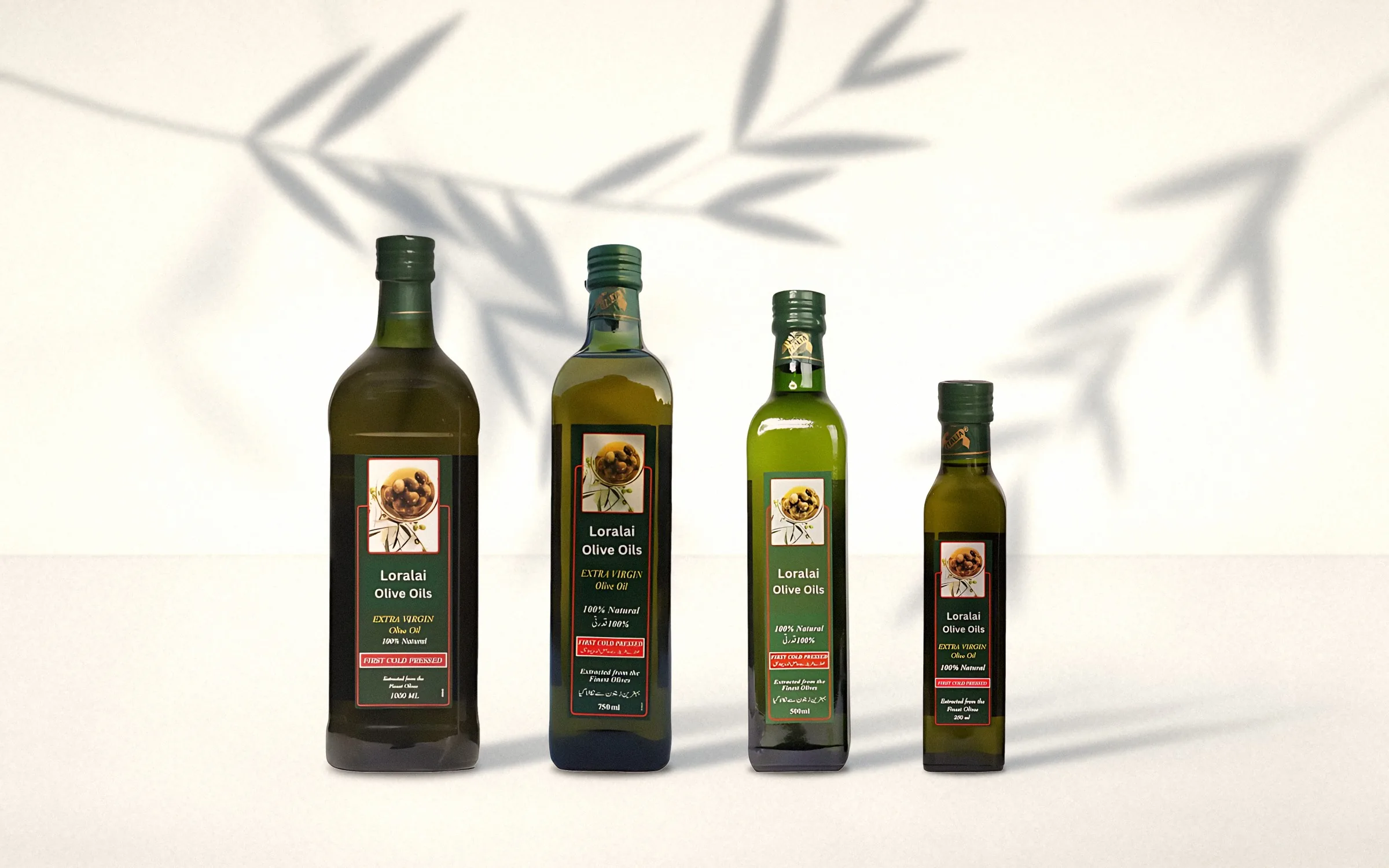
Quick answer: Extra virgin olive oil is the best olive oil for most home cooking, including salan, daal tarka, sabzi, eggs, shallow frying and roasting. It is more stable under heat than many oils because it is low in polyunsaturated fat and rich in antioxidants. For deep frying large batches, a refined olive oil or pomace oil is cheaper. “Light” olive oil suits baking when you want no olive taste.
Many people in Pakistan believe olive oil is only for salads and will “burn” in a karahi. That belief comes mostly from smoke point tables. Here is what actually happens when you cook with olive oil, and which type to use for which job.
In this guide
Smoke point is not the full story
The smoke point is the temperature at which oil starts to smoke. Good, fresh extra virgin olive oil usually starts to smoke at roughly 190 to 210 °C. Refined olive oil and pomace oil have higher smoke points.
But smoke point does not tell you how much an oil breaks down. What matters more is how resistant the oil is to oxidation. In a 2018 laboratory study, researchers heated ten common oils at 180 °C for six hours and also raised them gradually to 240 °C. Extra virgin olive oil produced the fewest harmful polar compounds of all the oils tested, and the researchers found that smoke point was not a good predictor of how an oil behaved. Canola oil, with a higher smoke point, produced more than two and a half times the polar compounds of extra virgin olive oil.
The reasons are simple. Olive oil is mostly monounsaturated fat, which oxidises slowly, and extra virgin olive oil contains natural antioxidants that protect it while it heats.
Typical cooking temperatures
| Cooking method | Typical oil temperature | Best olive oil |
|---|---|---|
| Raw: salad, raita, dips | Room temperature | Extra virgin |
| Gentle sauté, eggs, bhuna onions | 120 to 160 °C | Extra virgin |
| Tarka for daal | 160 to 180 °C, briefly | Extra virgin |
| Salan, karahi, sabzi | 150 to 180 °C | Extra virgin |
| Shallow frying: shami kebab, cutlets, fish | 170 to 180 °C | Extra virgin or refined olive oil |
| Oven roasting | 180 to 220 °C oven (food stays cooler) | Extra virgin |
| Deep frying: pakoras, samosas, fries | 170 to 190 °C | Refined olive oil or pomace oil for large batches; extra virgin is fine at home |
| Baking cakes and biscuits | 160 to 180 °C oven | Extra light or mild extra virgin |
The International Olive Council recommends frying at around 180 °C, which suits almost all home frying.
Olive oil for Pakistani cooking
Salan, karahi and bhuna
Extra virgin olive oil works well. Cook the onions on medium heat until golden, then add masala as usual. Olive oil gives a slightly lighter result than ghee. If you miss the ghee taste, add one teaspoon of ghee at the end for aroma and use olive oil for the rest.
Daal tarka
Heat two tablespoons of extra virgin olive oil until it shimmers, add cumin, garlic and dry red chillies, and pour it over the daal as soon as the garlic turns golden. Do not let the oil smoke.
Pakoras, samosas and deep frying
You can deep fry with extra virgin olive oil at home at 170 to 180 °C. It holds up well and gives a crisp result. The only drawback is cost for large amounts. For frying a large batch for guests, a refined olive oil or pomace oil is more economical. Do not reuse frying oil more than a few times, whatever oil you use.
Paratha and roti
Brush extra virgin olive oil on parathas in place of ghee for a lighter version. It works best on a medium-hot tawa.
Rice and pulao
Use extra virgin olive oil to fry the whole spices and onions for pulao or biryani.
Olive oil for continental and baking
- Pasta, roasted vegetables, grilled chicken: extra virgin.
- Cakes and brownies: light olive oil if you want a neutral taste, or mild extra virgin for olive oil cake.
- Mayonnaise: mix extra virgin with a mild oil, because 100% extra virgin can taste bitter when blended.
When to save the extra virgin for finishing
Fresh extra virgin olive oil has the most flavour and antioxidants when used raw. If your budget is tight, use a refined olive oil for cooking and keep extra virgin for salads, raita, chutneys and drizzling over daal, hummus or grilled food.
Signs you are overheating any oil
- Smoke rising from the pan
- A sharp, acrid smell
- Darkening of the oil
Turn the heat down, and if the oil has burnt, throw it away.
Frequently asked questions
Which olive oil is better for cooking?
Extra virgin olive oil for most home cooking, because it is stable under heat and keeps its antioxidants. Refined olive oil or pomace oil is a cheaper choice for frying large amounts.
Can I fry with extra virgin olive oil?
Yes. Shallow and deep frying at around 180 °C is fine. It is one of the most heat-stable cooking oils.
Is olive oil good for desi cooking?
Yes. It works for salan, karahi, daal tarka, sabzi and parathas. The taste is lighter than ghee.
What is the smoke point of extra virgin olive oil?
Roughly 190 to 210 °C for good, fresh extra virgin olive oil. Higher-quality, lower-acidity oil usually has a higher smoke point.
Which is the best olive oil for cooking in Pakistan?
A fresh extra virgin olive oil with a harvest date, sold in dark glass or a tin. Our 1 litre bottle is the best value for daily cooking.
More recipes and techniques: cooking with extra virgin olive oil.