
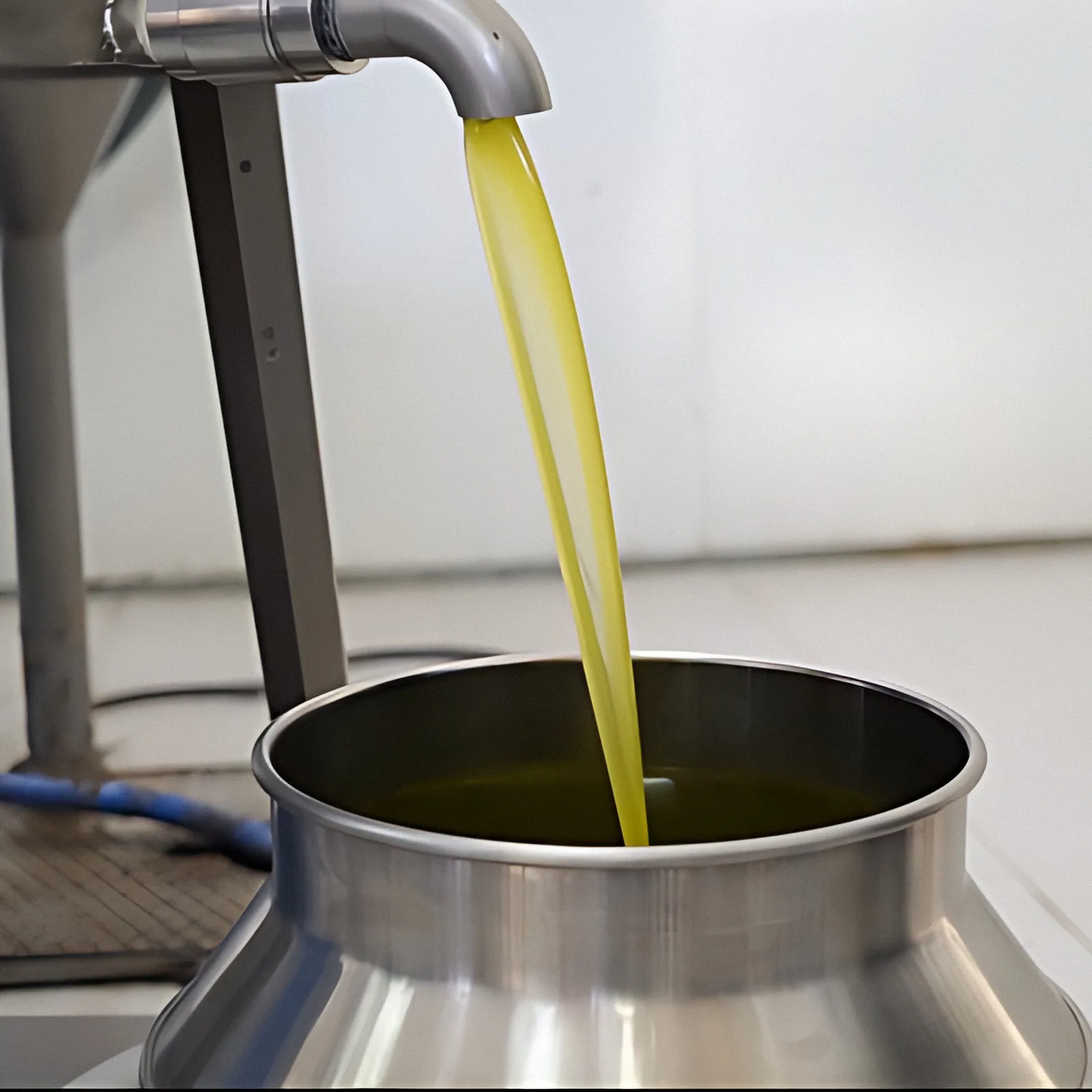
Quick answer: “Cold pressed” describes how the oil was extracted: the olive paste was kept below 27 °C. “Extra virgin” is a quality grade: the oil must be made mechanically, have free acidity of 0.8% or less and pass a taste test with no defects. Good extra virgin olive oil is usually cold extracted, but a cold pressed oil is not automatically extra virgin.
Many bottles say “cold pressed” and “extra virgin” on the same label, so it is easy to think they mean the same thing. They do not. One describes how the oil was made. The other describes how good the finished oil is.
In this guide
What “cold pressed” means
Olives are crushed into a paste, the paste is mixed, and the oil is separated from the water and solids. If the paste is warmed, more oil comes out, but heat also damages flavour and aroma. “Cold pressed” or “cold extracted” means the paste was kept at a low temperature during this process. In European Union rules, the term can only be used when the temperature stays below 27°C.
Strictly speaking, “pressed” is an old word. Very few mills still use presses. Most use a centrifuge, which is why you will also see “cold extracted”. Both terms describe the same idea: no heat added.
What “extra virgin” means
Extra virgin is a quality grade with rules behind it. To be called extra virgin, an olive oil must:
- be extracted only by mechanical means, without chemical solvents or refining;
- have low free acidity, a measure of how much the oil has broken down (no more than 0.8% under international standards);
- pass a tasting test by a trained panel, with some fruitiness and no defects such as rancid, musty or winey flavours.
So extra virgin is about the result. It tells you the oil is unrefined and free of faults.
How the two terms fit together
- Almost all real extra virgin olive oil is cold extracted, because heat would make it harder to meet the taste standard.
- But “cold pressed” alone does not guarantee extra virgin quality. Oil from damaged or old olives can be cold pressed and still have defects.
- Refined, “pure” or “light” olive oils are not cold pressed in any meaningful way, because refining uses heat and chemical treatment.
When you shop, look for extra virgin first. “Cold pressed” is a useful extra detail, but the grade is what matters most.
What about “first cold pressed”?
This phrase comes from the days of stone presses, when the same paste was pressed more than once. Modern mills extract the oil in a single step, so there is no second pressing. “First cold pressed” is a traditional phrase that today means much the same as “cold extracted”.
Does it change the taste?
Yes. Low temperatures keep the fresh, green aromas and the natural bitter and peppery compounds in the oil. Warmer extraction gives more oil, but it tastes flatter.
Speed matters just as much as temperature. Olives begin to lose quality as soon as they are picked, so the time between harvest and mill is important. At Loralai Olive Oils we press our olives on the same day we pick them, with no heat and no chemicals, and nothing is blended in. See all sizes in our shop, or read about how we grow and press our oil.
Quick summary
| Term | What it tells you |
|---|---|
| Cold pressed / cold extracted | The paste was not heated during extraction (below 27°C in EU rules) |
| Extra virgin | Highest grade: mechanical extraction, low acidity, no taste defects |
| Virgin | Mechanical extraction, but small defects or higher acidity |
| Pure / light / olive oil | Mostly refined oil, with a little virgin oil added |
Related guides
- What is extra virgin olive oil?
- How olive oil is made
- Types of olive oil
- The complete olive oil guide
Frequently asked questions
Is cold pressed olive oil the same as extra virgin?
No. Cold pressed is a method; extra virgin is a grade with chemical and taste tests.
Which is better, cold pressed or extra virgin?
Look for both. Extra virgin is the more important word, because it guarantees quality tests were passed.
Is all extra virgin olive oil cold pressed?
Most is cold extracted today, usually with a centrifuge rather than a press, to protect aroma and antioxidants.