
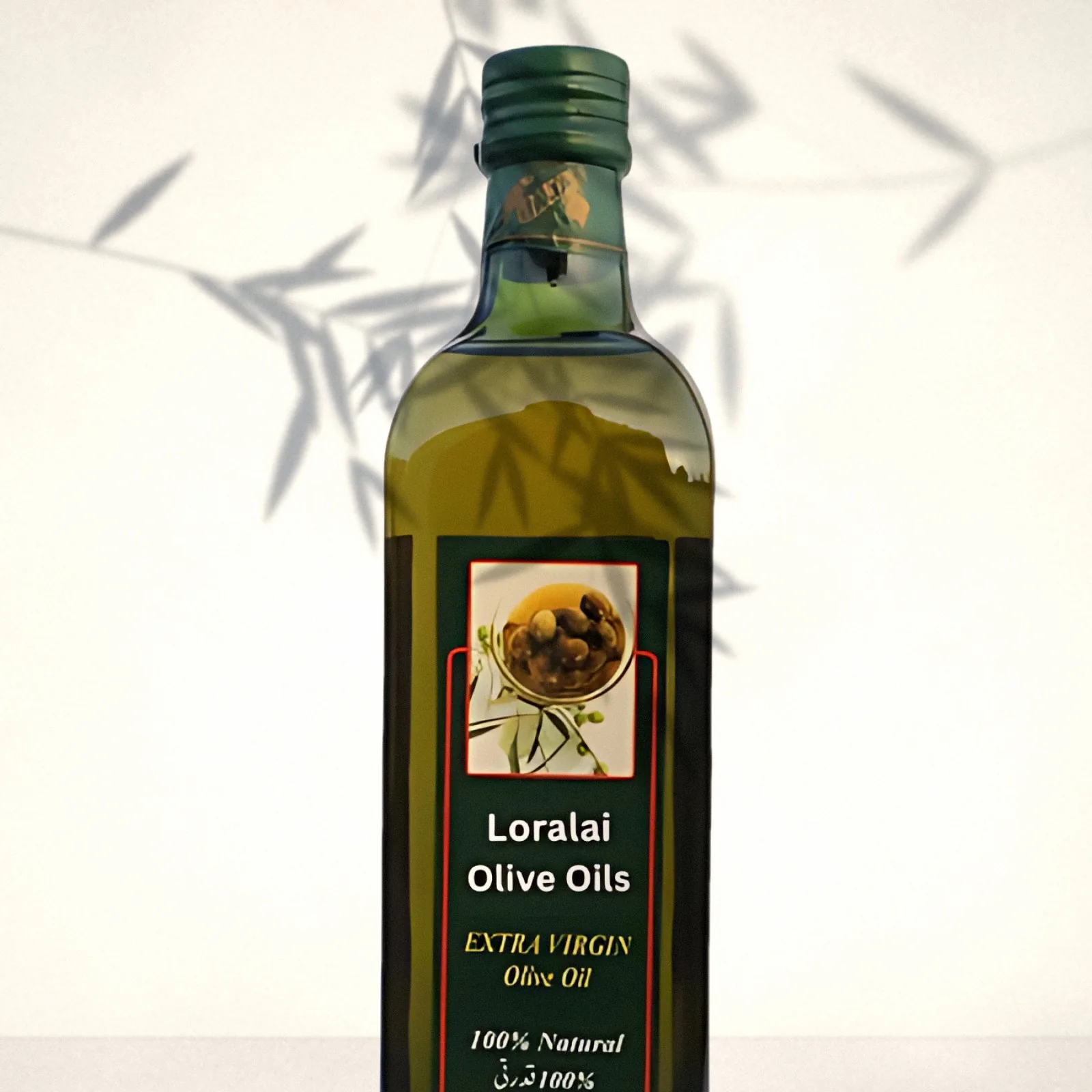
Quick answer: There are five main types of olive oil sold in shops. Extra virgin olive oil is the top grade: pressed from olives only, with free acidity of 0.8% or less and no taste defects. Virgin olive oil is pressed the same way but allows small defects. “Olive oil” (pure or classic) and extra light olive oil are mostly refined. Olive pomace oil is extracted from the leftover paste with solvents and refined.
The names on olive oil bottles can be confusing, and some of them are marketing words rather than grades. This guide follows the trade standard of the International Olive Council (IOC), which Pakistan, the EU and most olive-producing countries use.
In this guide
- The two families: virgin and refined
- 1. Extra virgin olive oil
- 2. Virgin olive oil
- 3. Olive oil, "pure" olive oil and "classic" olive oil
- 4. Extra light olive oil
- 5. Olive pomace oil
- Lampante oil: the one you never buy
- Side-by-side comparison
- What about "cold pressed" and "first press"?
- Which type should you buy?
- Frequently asked questions
The two families: virgin and refined
Every olive oil belongs to one of two families.
- Virgin olive oils are obtained only by mechanical means: crushing, mixing and pressing or spinning the olives, under conditions that do not alter the oil. No heat beyond what the process creates, and no chemicals. Washing, settling, centrifuging and filtering are the only other steps allowed.
- Refined olive oils start as oil that is not good enough to sell as virgin. They are refined with heat, filtering and neutralising to remove the bad taste and smell. Refining also removes most of the natural antioxidants, colour and flavour.
Most bottles in supermarkets are either extra virgin (pure virgin oil) or a blend of refined oil with a little virgin oil added back for taste.
1. Extra virgin olive oil
Extra virgin is the highest grade. To earn the name, an oil must pass both a chemical test and a taste test.
- Free acidity: 0.8% or less, measured as oleic acid
- Taste panel: no defects at all, and a clear fruity taste
- Process: mechanical only, no refining
Free acidity tells you about the health of the olives. Fresh, whole olives pressed quickly give low acidity. Bruised, old or fermented olives give high acidity. It has nothing to do with whether the oil tastes sour.
Extra virgin olive oil keeps the polyphenols that give it a bitter, peppery bite. It is the grade used in most of the research on olive oil and health, and the only grade we make. See our 1 litre extra virgin olive oil.
2. Virgin olive oil
Virgin olive oil is made the same way as extra virgin, but it has a free acidity of up to 2.0% and may have slight taste defects. It is less common on shop shelves because producers usually either sell their best oil as extra virgin or send weaker oil for refining.
3. Olive oil, “pure” olive oil and “classic” olive oil
When a label just says “olive oil”, or uses words like “pure”, “classic” or “100% olive oil”, it usually means a blend of refined olive oil and virgin olive oil. The IOC calls this simply “olive oil”. The free acidity must be 1.0% or less.
The taste is mild and the colour is pale yellow. It is fine for everyday cooking, but most of the natural antioxidants were removed during refining. The word “pure” means only that no other vegetable oil was mixed in. It does not mean “best”.
4. Extra light olive oil
“Light” or “extra light” refers to the taste and colour, not to calories or fat. Extra light olive oil has the same 9 calories per gram as any other oil. It is mostly refined olive oil with very little virgin oil, so it tastes of almost nothing. Some people choose it for baking cakes or frying when they do not want any olive flavour.
5. Olive pomace oil
After olives are pressed, a paste of skins, flesh and stones is left. That paste, called pomace, still holds a little oil. It is extracted with a solvent such as hexane, then refined, and usually blended with some virgin olive oil. The result is sold as olive pomace oil.
Pomace oil is the cheapest olive product. It has a high smoke point and is used for commercial deep frying, in restaurants, and for soap and massage oil. By law it cannot be sold simply as “olive oil”. Read pomace olive oil explained for the full story.
Lampante oil: the one you never buy
Lampante virgin olive oil is oil with high acidity or serious defects. Its name comes from the old use of such oil in lamps. It is not fit to eat as it is and must be refined first. It ends up inside refined olive oil and blends.
Side-by-side comparison
| Type | Process | Free acidity | Taste | Natural antioxidants | Best use |
|---|---|---|---|---|---|
| Extra virgin | Mechanical only | 0.8% or less | Fruity, bitter, peppery | High | Raw, cooking, frying, hair, skin |
| Virgin | Mechanical only | 2.0% or less | Mild, slight defects possible | Medium to high | Cooking |
| Olive oil / pure / classic | Refined + some virgin | 1.0% or less | Mild | Low | Everyday cooking |
| Extra light | Mostly refined | 1.0% or less | Almost none | Very low | Baking, frying |
| Olive pomace oil | Solvent extraction + refined | 1.0% or less | Neutral | Very low | Deep frying, soap, massage |
What about “cold pressed” and “first press”?
“Cold pressed” or “cold extracted” means the paste was kept below 27 °C during extraction. It is a good sign, but it is not a grade. Almost all modern extra virgin olive oil is made in a continuous centrifuge, not a press, so “first press” is mostly a marketing phrase today. We explain the difference in cold pressed vs extra virgin olive oil.
Which type should you buy?
- For salads, dipping, drizzling and hair or skin care: extra virgin.
- For everyday Pakistani cooking at home: extra virgin if your budget allows, or a refined olive oil for large batches.
- For deep frying a lot of food at once, such as pakoras for a crowd: a refined olive oil or pomace oil is the cheaper choice.
See best olive oil for cooking for more detail on heat and frying.
Frequently asked questions
Which is better, virgin or extra virgin olive oil?
Extra virgin. It has lower acidity, no taste defects and usually more polyphenols. Virgin olive oil is a step below.
Is pure olive oil the same as extra virgin?
No. “Pure” olive oil is mostly refined olive oil blended with a little virgin oil. Extra virgin is not refined at all.
Does light olive oil have fewer calories?
No. “Light” describes the colour and taste. All olive oils have about 9 calories per gram, or 119 calories per tablespoon.
What is the difference between pomace oil and extra virgin olive oil?
Extra virgin is pressed from fresh olives without chemicals. Pomace oil is extracted from the leftover paste with a solvent and then refined. See pomace vs extra virgin.